

Best Gifts for Mixed-Age Family Playrooms
*This post contains affiliate links. I may earn a small commission if you purchase through my links, at no extra cost to you. I only recommend things I truly stand behind.
Open-Ended Toys That Grow With Every Child in Your Home
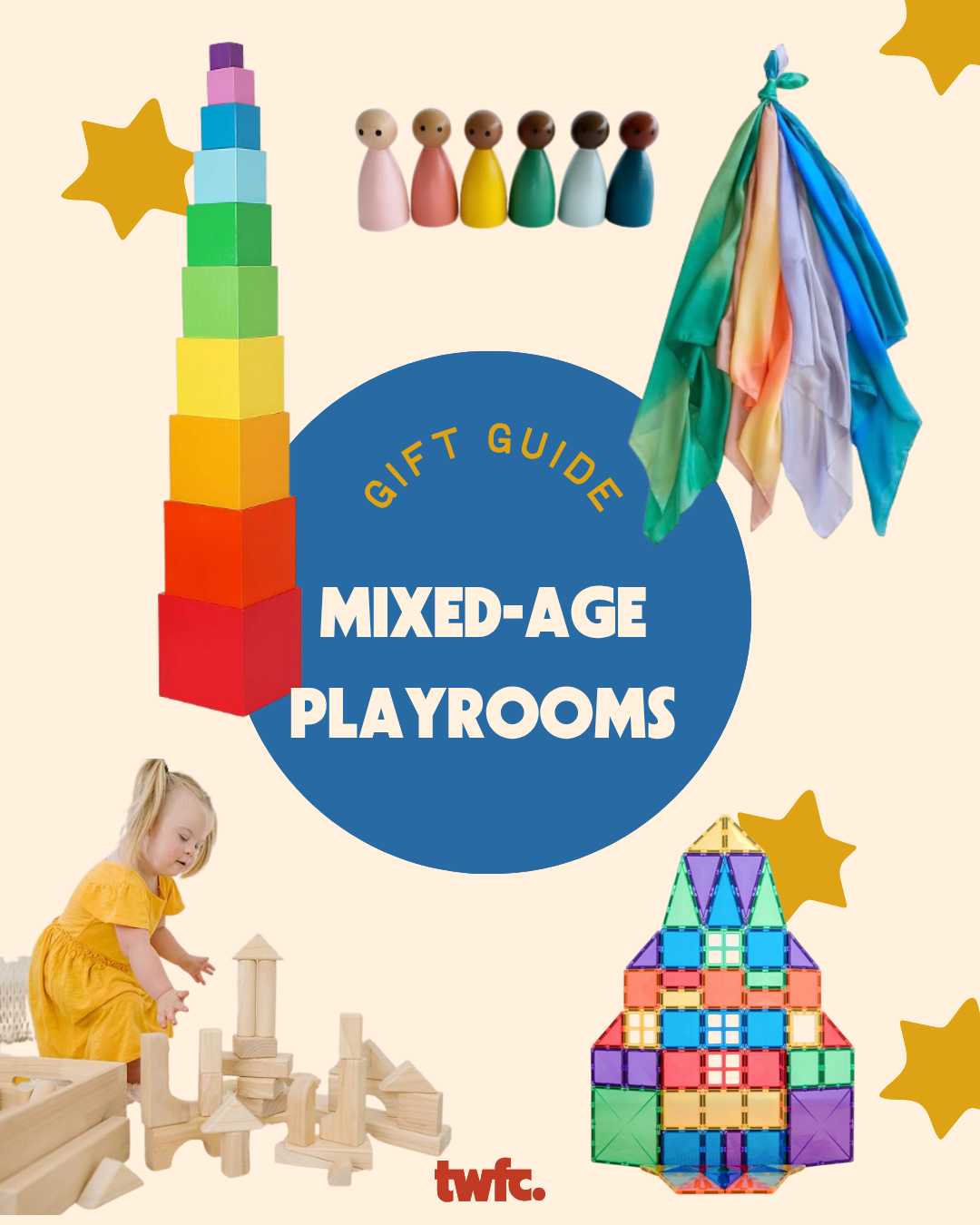
When you have multiple kids at different stages, you need toys that work for everyone—not just right now, but for years. The best multi-age playroom investments are the ones that scale with development: what challenges your toddler becomes a tool for your preschooler's imagination and a building material for your school-aged kid's engineering projects. This guide features toys that bridge ages, encourage sibling play, and eliminate the need for separate toy collections. These are the pieces that get used differently every year and never really get outgrown.
WHAT CAN I HELP YOU FIND?Building & Construction for All Ages
Movement & Gross Motor Play
Small World & Imaginative Play
Loose Parts & Open-Ended Materials
Crash Play & Soft Structures
Building & Construction for All Ages
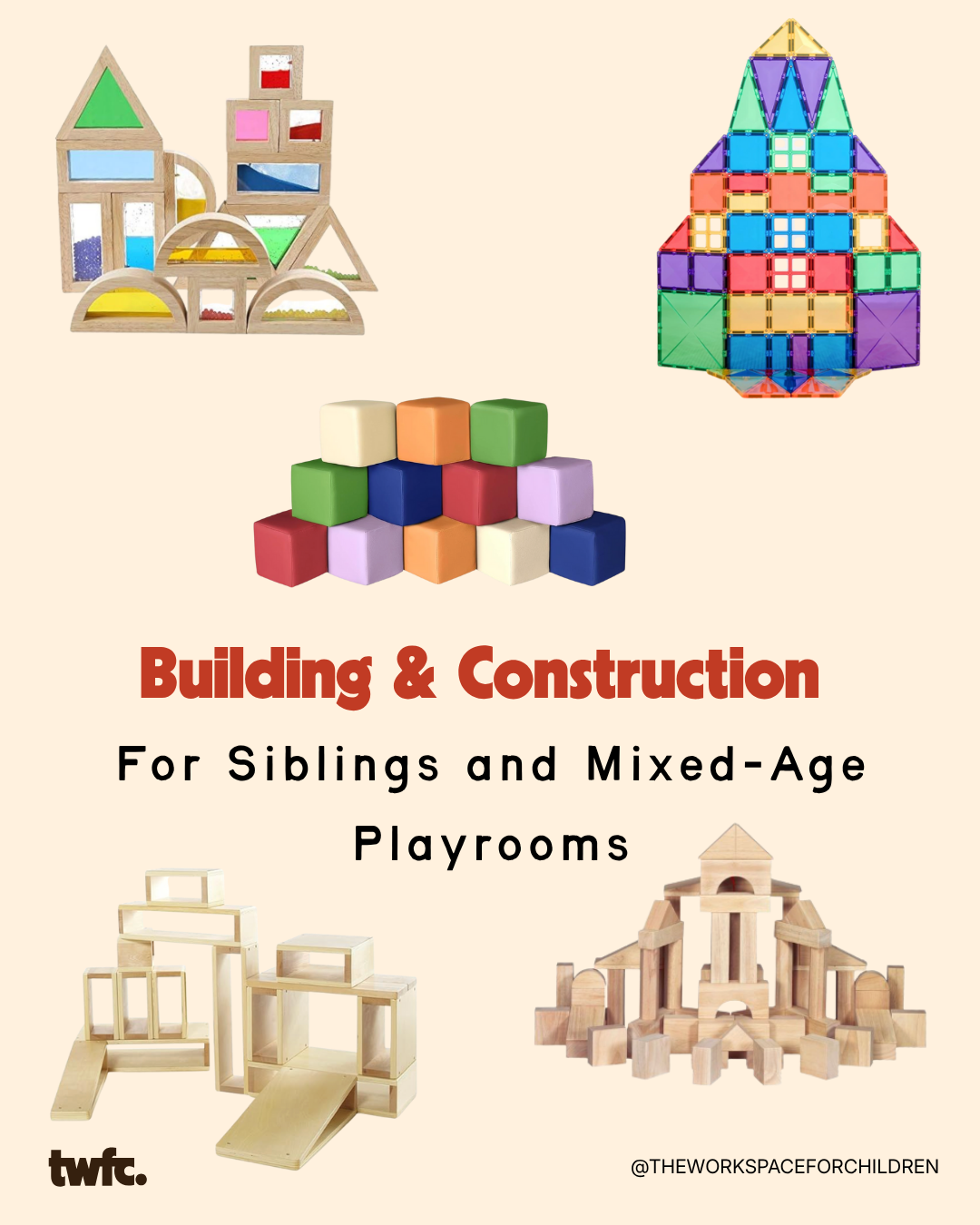
Translucent magnetic tiles in assorted shapes for building 2D and 3D structures.
Why I chose it: The holy grail of multi-age toys. Your toddler stacks them flat. Your preschooler builds towers. Your seven-year-old engineers complex structures. Same toy, endlessly evolving play. One of the best investments you can make for a family playroom.
Classic wooden blocks in standard shapes and sizes with storage crate.
Why I chose it: These are the building blocks of childhood—literally. They work for every age and every stage. Babies knock them down, toddlers stack them, preschoolers build cities, and older kids create elaborate worlds. As your collection grows, so does the complexity of what they can build together.
Wooden blocks with colorful acrylic inserts, beads, and textures.
Why I chose it: All the benefits of regular blocks plus sensory magic. Littles love the colors and sounds; older kids use them architecturally for windows, light effects, and design. Building blocks that feel special.
Oversized, lightweight foam blocks for stacking and building.
Why I chose it: Big, safe, and satisfying for everyone. Toddlers can build without frustration or injury. Older kids create forts and obstacle courses. And when someone knocks it down? No tears, no bruises, just rebuild.
Large-scale wooden blocks for building structures kids can actually get inside.
Why I chose it: These transform a playroom. Kids collaborate to build stages, houses, stores, and hideouts. It's construction play that encourages teamwork across ages—older kids engineer, younger ones help and play inside the finished builds.
Nesting boxes that stack, nest, and create tunnels and structures.
Why I chose it: Simple but endlessly useful. Babies nest them, toddlers stack them, preschoolers make roads and tunnels, older kids incorporate them into elaborate builds. They pack away small but play big.
Colorful magnetic building cubes that connect on all sides.
Why I chose it: A different building experience than tiles—more like LEGO meets magnets. Great for kids who love the satisfaction of magnetic snaps but want more sculptural, 3D building options.
Movement & Gross Motor Play
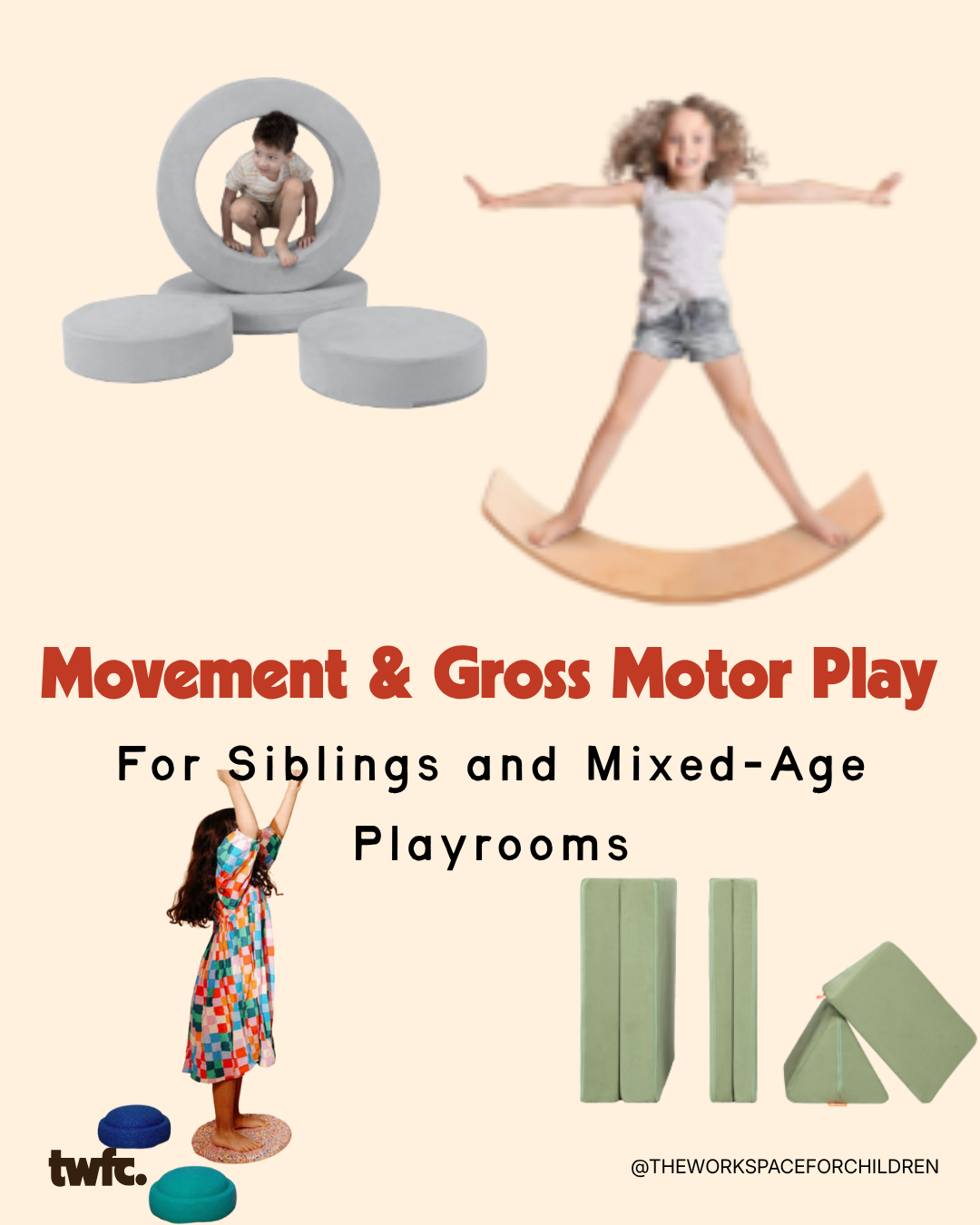
Four-piece foam couch (base, cushion, two triangle pillows) that transforms into forts, slides, and crash pads.
Why I chose it: Worth every penny for multi-age families. It's a crash pad for wild toddler energy, a fort for preschool imagination, a reading nook for school-aged kids, and a hangout spot for tweens. Everyone uses it differently, but everyone uses it.
Four-piece foam ottoman that nests, stacks, and transforms.
Why I chose it: Like the Nugget's little sibling—more compact but just as versatile. Great for smaller spaces or as an addition to Nugget play. Kids of all ages jump, build, crash, and chill.
Curved wooden board for rocking, balancing, and open-ended play.
Why I chose it: Babies rock in it like a cradle. Toddlers use it as a bridge or slide. Preschoolers balance and spin. School-aged kids stand and wobble. Teens use it as a desk chair rocker. One toy, a decade of use.
Weighted, textured stones for balancing and creating obstacle courses indoors or out.
Why I chose it: The toddler steps carefully from one to the next. The five-year-old hops and jumps between them. The eight-year-old designs complex challenge courses. Scales beautifully with coordination and creativity.
Small World & Imaginative Play
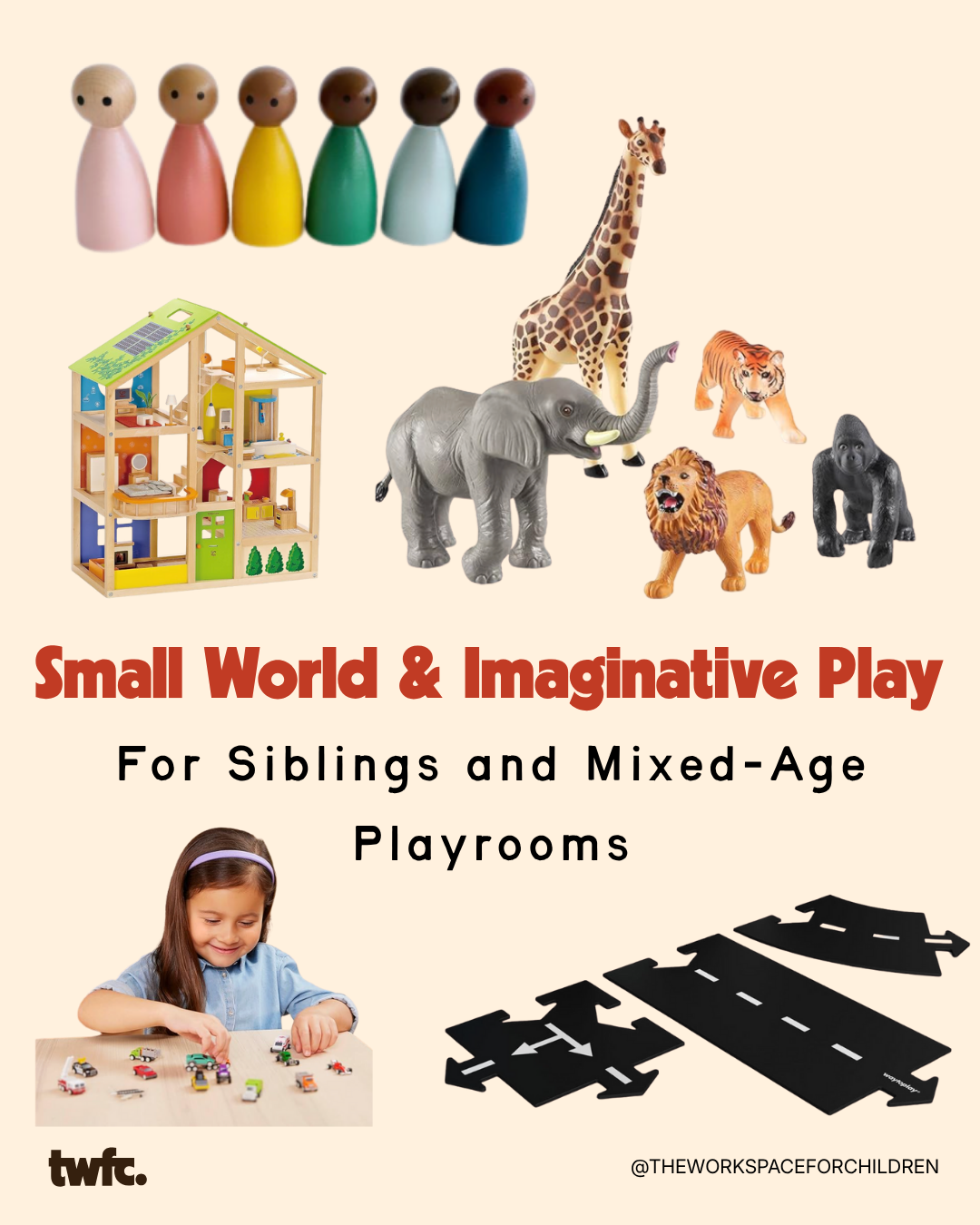
Oversized, realistic animal figures for small world play.
Why I chose it: Big enough for toddler hands, detailed enough for older kids' storytelling. These become characters in block cities, zoo exhibits, nature studies, and imaginative adventures that span ages.
People are the foundation of pretend play. Toddlers carry them around. Preschoolers create families and scenarios. Older kids build entire communities. The more figures you have, the richer the play becomes.
Universal appeal across ages and play styles. They drive on roads, get loaded in block garages, transport loose parts, star in rescue missions, and become part of every build.
Open-sided wooden dollhouse with furniture and accessories.
Why I chose it: A stage for storytelling that grows with your kids. Toddlers move figures in and out. Preschoolers act out daily life. School-aged kids create complex narratives. It becomes a multi-generational play space where siblings' stories intersect.
Flexible road pieces that connect and configure and can be used in the bath, in the snow, in the playroom, in the mud, or at the beach.
Why I chose it: Extends block and vehicle play for all ages. Simple layouts for toddlers, complex cities for older kids. When you have roads, the building becomes purposeful and collaborative.
Loose Parts
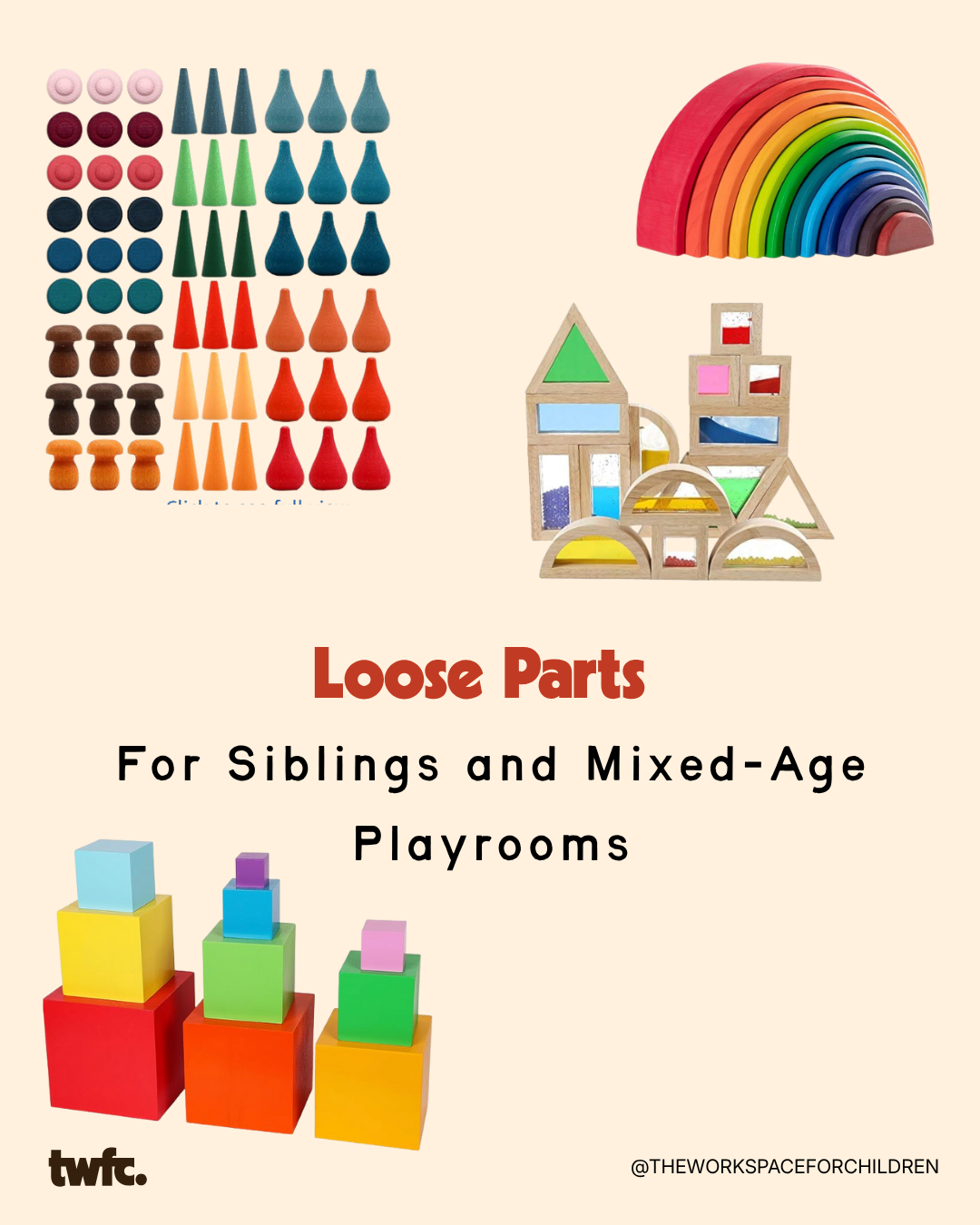
Assorted wooden shapes for open-ended creation.
Why I chose it: The ultimate open-ended material. Toddlers sort and stack. Preschoolers use them as pretend food, money, or treasures. Older kids incorporate them into builds, art, and games. Every age finds a use.
Graduated wooden arches that nest and stack.
Why I chose it: Iconic for a reason. It's a stacker, a tunnel, a dollhouse roof, a bridge, a sculpture. Simple, beautiful, and used differently at every developmental stage.
Choosing the Right Toys for Your Multi-Age Playroom
When you're shopping for a family with kids at different stages, the temptation is to buy something for each age. Invest in toys that work for everyone, not just now, but as they grow. Multi-age toys aren't just budget-smart; they're collaboration-builders. When your toddler and your seven-year-old can both engage with the same set of blocks or the same play couch, they're learning to play together, negotiate, and create alongside each other. The toys in this guide are the ones that don't get outgrown—they get played with differently. Magnetic tiles that toddlers stack become elaborate structures for school-aged kids. A wobble board that rocks a baby becomes a balance challenge for an eight-year-old. A set of loose parts becomes a hundred different things depending on who's playing and what they imagine. These are the investments that simplify your playroom, reduce clutter, and create a space where everyone can play—together or side by side—without needing separate toy bins for every age. When you build a playroom around open-ended, multi-age materials, you're not just buying toys. You're creating a space where childhood can unfold naturally, at every stage, for every kid in your home.