

Best Gifts for Kids Who Love Play-dough

*This post contains affiliate links. I may earn a small commission if you purchase through my links, at no extra cost to you. I only recommend things I truly stand behind, love, and use with my own family.
Creative Materials, Loose Parts & Art Supplies That Grow With Your Child
Kids who love playdough are builders, tinkerers, and creators at heart. A container of buttons becomes money, food for animals, then a mandala. Play dough transforms into birthday cakes, snakes, or just something satisfying to squish while they think. These materials don't have instructions because children don't need them. The play is in the process, not the product. This guide features playdough supplies, loose parts, and creative materials that invite experimentation, support fine motor development, and give kids permission to make, unmake, and remake—over and over again.
WHAT CAN I HELP YOU FIND?Foundation Art Supplies & Tools
Moldable & Sensory Materials
Loose Parts for Sorting, Stacking & Creating
Building & Construction Additions
Documentation & Display Tools
Supplies & Tools

Small wooden rolling pin perfectly sized for little hands working with play dough.
Why I chose it: Adult rolling pins are too heavy and too long for kids who are still building hand strength. This mini version gives them real control and real results—flat dough that's actually ready to cut, mold, or bake. It's the difference between frustration and pride.
Press-and-push extruders that turn play dough into long ribbons, shapes, and textures with just a squeeze.
Why I chose it: There's something deeply satisfying about pushing dough through a hole and watching it transform. Kids do it over and over—and every time feels like a little miracle. These extruders build hand strength, introduce cause and effect, and keep kids at the table longer than almost anything else.
Ready 2 Learn Character Accessories
A set of colorful press-in accessories for turning play dough blobs into monsters, creatures, and characters.
Why I chose it: The moment a kid presses two eyes and a mouth into a ball of dough, it becomes something with a name and a story. These accessories hand that power directly to children—and what follows is almost always imaginative play, not just sculpting.
Lowercase letter stamps designed for pressing into play dough, clay, or soft surfaces.
Why I chose it: This is literacy work disguised as play. Kids stamp their name, spell words, or just press every letter in order because it feels good. The physical act of pressing and lifting builds letter recognition in a way that worksheets simply can't.
A wooden set of seven tools including a rolling pin, stamps, a squeezer, and sculpting accessories sized for little hands.
Why I chose it: Having a real set of tools changes everything. Kids stop using their fingers for everything and start making deliberate choices—this one to flatten, this one to texture, this one to cut. It introduces intention into the play, which is exactly where the learning lives.
Twelve wooden sculpting and modeling tools for working with play dough, clay, and other moldable materials.
Why I chose it: More tools means more options, and more options means longer, richer play. This set gives kids the vocabulary to do real work with dough and clay—cutting, shaping, texturing, and smoothing. It's the kind of set that grows with them from toddlerhood into real art-making.
Pure essential oils for adding scent to homemade play dough, sensory bins, or art projects.
Why I chose it: Scent makes everything more memorable. A few drops of lavender in play dough turns it into calming, focused work. Peppermint feels like the holidays and watermelon oil feels like candy. Kids notice. And honestly, so do you—especially when you're sitting next to them while they create.
Real wooden knife designed for small hands to safely cut soft foods, play dough, and clay.
Why I chose it: This is the knife that says "you're capable." It's real enough to work, safe enough to hand over without hovering. Kids use it to slice bananas, cut play dough into "pizza," or chop clay into careful pieces. Independence with a side of fine motor work.
Highly concentrated, brilliant liquid paints that mix, layer, and create vibrant colors for your playdough.
Why I chose it: A few drops in hot water make the color for your homemade dough. More drops make it bolder. Add them to glue for colored adhesive, freeze them in ice cubes, or use them straight for intense color. One bottle lasts forever and does everything.
Assorted wooden beads in bright colors for stringing, sorting, counting, and pattern-making.
Why I chose it: These are the playdough loose parts that never get old. Toddlers sort by color. Preschoolers make patterns. Older kids use them as pretend food, or incorporate them into elaborate ideas. Keep them handy, they are endlessly useful.

The difference between play dough that gets played with for twenty minutes and playdough that gets played with for twenty seconds and then abandoned is almost always the setup. Here's what works.
Moldable & Sensory Materials

Natural, plant-based play dough in assorted colors—soft, pliable, and safe for little ones.
Why I chose it: Sometimes you just need playdough that's ready to go. This is softer than most store-bought brands, doesn't leave residue on your table, and the colors stay vibrant longer. Plus, you can feel good about what's in it—because inevitably, someone's going to taste it.
Essential ingredient for making the best homemade play dough—smooth, soft, and long-lasting.
Why I chose it: If you've never made homemade play dough, this is your sign. It's cheaper, softer, and lasts longer than store-bought. And cream of tartar is the secret ingredient that makes it perfect. Bonus: kids love being part of the making process.
All-purpose flour for play dough, sensory bins, paste, and simple baking projects.
Why I chose it: Flour is one of those humble materials that does so much. It's the base of play dough, the texture in sensory bins, and the start of real baking. Keep a big bag in your pantry and you're always ready for spontaneous creating.
Keeps homemade play dough soft, pliable, and non-sticky—essential for long-lasting sensory play.
Why I chose it: This is what makes play dough feel like the good stuff. A little oil in the recipe keeps it from drying out or crumbling.
Hand-crank pasta maker that transforms play dough or clay into uniform strips, sheets, and shapes.
Why I chose it: This tool turns play dough time into serious engineering. Kids crank the handle, feed in dough, and watch ribbons emerge—cause and effect at its most satisfying. It's also perfect for making "noodles" for pretend play or creating thin clay for pottery projects. Real tools, real results.
Wavy-edged cutter for slicing play dough, clay, fruits, and vegetables with a decorative edge.
Why I chose it: The crinkle edge makes everything more fun. Cutting play dough into "fancy fries" or slicing strawberries with a pattern makes them feel like chefs. It's safe, effective, and adds just enough novelty to keep them engaged longer.
Loose Parts for Sorting, Stacking & Creating

A set of sixteen miniature woodland and forest animal figurines for small world play, sorting, and storytelling.
Why I chose it: Drop a handful of these into a play dough scene and watch what happens. Suddenly there's a forest. There are animals that need homes, food, and families. Small figures like these are the spark that turns dough play into narrative play—which is where language, empathy, and imagination all collide.
Giant assortment of buttons in every color, size, and style for sorting, counting, crafting, and pretend play.
Why I chose it: Buttons are the ultimate loose part. They're math manipulatives. They're money. They're mosaic tiles. They're pretend cookies. A thousand buttons means you never run out of possibilities—or projects. Keep them in a big jar and let kids help themselves.
Self-adhesive wiggle eyes in assorted sizes for turning any creation into a character.
Why I chose it: Two googly eyes instantly make anything funny and alive. A play dough blob becomes a creature with personality. These are an effective tool for encouraging storytelling and humor in art.
Plastic pony beads in bright colors for stringing, sorting, and pattern-making.
Why I chose it: These are slightly bigger than regular beads, which makes them perfect for beginners still mastering pincer grasp. Kids string them on pipe cleaners,or pop them right into the playdough to make patterns.
Soft, colorful craft pom poms in assorted sizes for sorting, gluing, and sensory play.
Why I chose it: Pom poms are tactile gold—soft, bright, and satisfying to touch. Kids sort them with tongs, glue them to paper, hide them in sensory bins, or just run their fingers through a bowl of them. They're the loose part that everyone loves, from toddlers to tweens and they make an amazing addition to playdough
Bendable, fuzzy craft stems for sculpting, connecting, and three-dimensional creations.
Why I chose it: Pipe cleaners are one of those materials kids return to again and again. They twist them into shapes, thread beads onto them, use them to connect other materials, or just bend them while they think. Cut them up small or leave them long, but add them to your playdough stash and thank me later.
Building & Construction Additions

4 Pcs Wooden Crab Lobster Mallets
Beechwood mallets sized for little hands — perfect for pounding, flattening, and texturing play dough.
Why I chose it: There's something irresistible about a mallet. Kids pound play dough flat, hammer it into trays, or just enjoy the satisfying thud of it. It builds hand strength, releases energy, and turns a quiet craft into something wonderfully physical. Plus — they feel like real tools, which is always the point.
A shallow, wipeable tray that creates a defined workspace for play dough, clay, and art materials.
Why I chose it: Boundaries are actually freeing. When kids have a contained space to work in, they go deeper—not wider. The tray keeps materials organized, makes cleanup faster, and signals that this is a real workspace deserving real focus.
Colorful wooden golf tees for poking, sorting, building, and embedding into play dough.
Why I chose it: Golf tees are one of those unexpected loose parts that kids absolutely love. Poke them into play dough to make a "porcupine," sort them by color, or use them as tiny fence posts around a dough sculpture. They're cheap, they're colorful, and they show up in the most creative ways.
Small wooden craft sticks
Why I chose it: Regular popsicle sticks are great, but these mini ones are perfect for smaller hands and more intricate designs. Kids use them to build tiny bridges, construct frames, or mold theme into playdough sculptures. They're also the right size for "building" with play dough or clay as support beams.
Large, brightly colored wooden sticks for building and open-ended construction.
Why I chose it: The jumbo size makes these easier to handle and the colors make every creation more exciting. Kids build fences for pretend animals, bridges for toy cars, or just stack them into towers. No glue needed—just imagination and balance.
Natural bamboo mat for adding texture to your playdough play.
Why I chose it: Kids find so many ways to add this to playdough play!
Large, durable canvas for protecting floors during messy art or creating collaborative murals.
Why I chose it: This isn't just a drop cloth—it's permission to go big. Spread it on the floor for and protect your space while giving kids room to work large.
Unfinished wooden tray for organizing playdough parts.
Why I chose it: When kids can see their choices, they use them. No more dumping. Instead, watch your children dive right into play.
Creative Tools
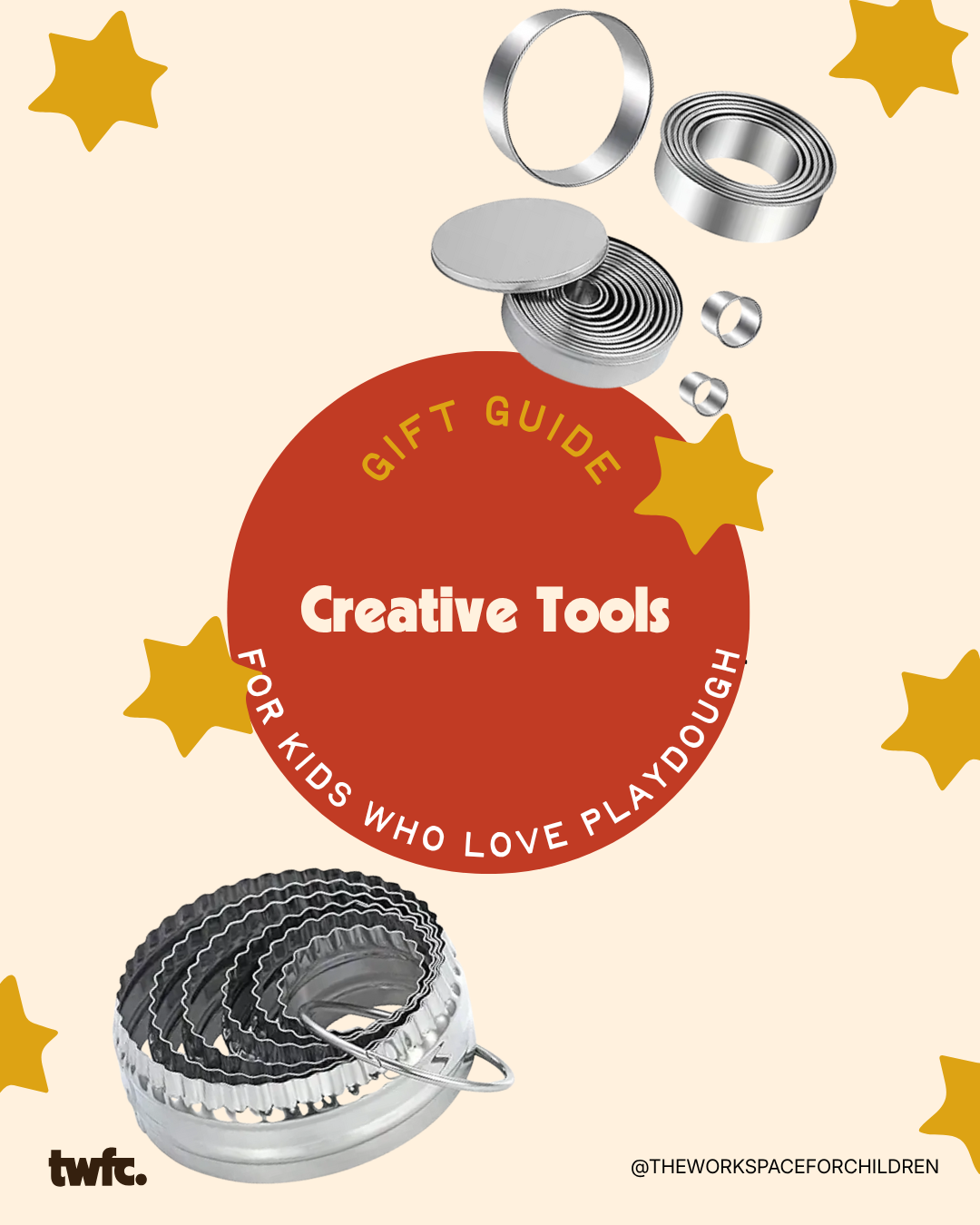
Metal cookie cutters with decorative edges for play dough, clay, and real baking.
Why I chose it: The fluted edge makes everything look a little more special. Kids press them into play dough to make "fancy cookies," use them to cut shapes, and actually bake with them. Real kitchen tools that transition seamlessly to art tools—and back again.
Graduated set of circular metal cutters in multiple sizes for nesting, tracing, and cutting.
Why I chose it: Circles are everywhere—in art, in math, in building. This nested set teaches size relationships while providing the most versatile cutting shape. Kids use them to make play dough pizzas, trace perfect circles for art, or just nest them together because it's satisfying.