Parenting as Resistance
When our kids see us cry/ Guidance on responding to their questions/ Resources for parents and teachers
It’s hard enough to hold our own emotions, and it’s another thing entirely when our children see us fall apart.
And most likely, they are seeing it right now.
What we model in these moments helps our kids feel safe, grounded, and connected even when things feel uncertain.
And if you haven’t shown up the way you wanted to? That’s okay.
You’re allowed to start small. You’re allowed to start again.
There’s no one right way to parent, only the way that works for you and your family.
Take what fits, and leave the rest.

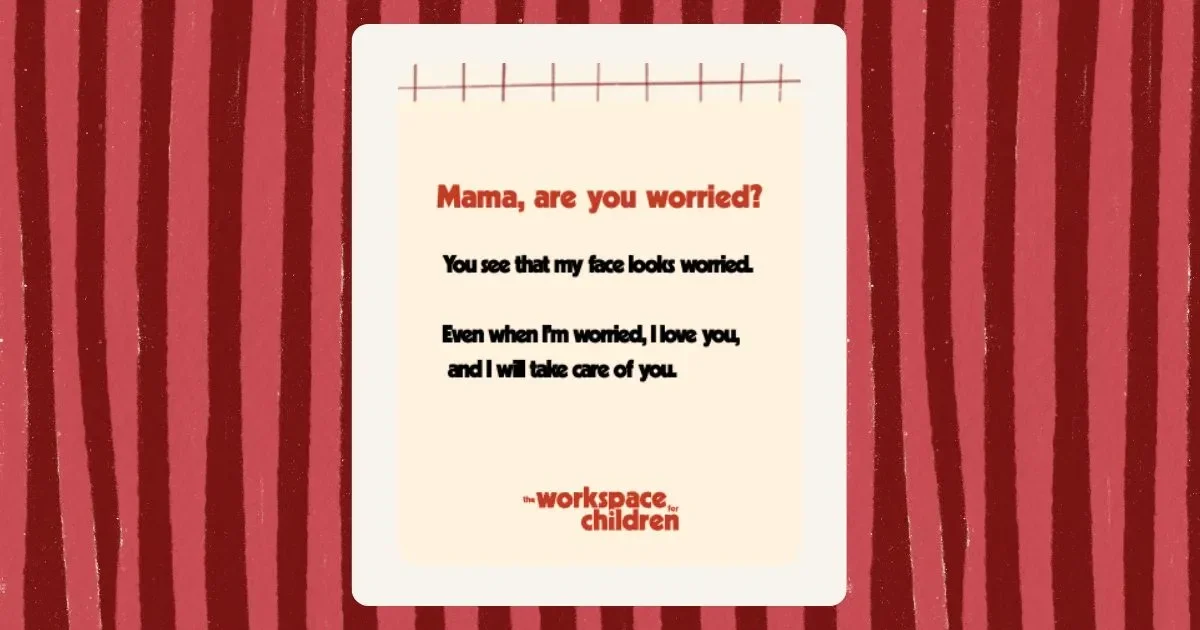
Mama, are you worried?
You see that my face looks worried.
I want you to know that even when I’m worried, I love you, and I will take care of you.
Mama, are you angry?
Yes. I am angry.
It is okay to feel angry. I’m not angry with you.
You did not do anything to make me angry.
Even when I am angry, I love you and I will take care of you.
Mama, are you crying?
Yes. I’m feeling sad. When I feel sad, I cry. It is always okay to ask me about anything at all. Even when I am crying, I love you and I will take care of you.
Kids are incredibly perceptive. They notice when we’re upset, when something has changed, or when adults are whispering.
When we don’t give them age-appropriate information, their imaginations fill in the blanks. A child who senses something is wrong but doesn’t get an explanation might think they caused the problem or that it’s even worse than it is.
The truth, delivered in a way they can understand, gives kids something solid to hold onto. It shows them that difficult things can be talked about and helps them feel less alone.
I am not an expert on immigration, and I’ve found these resources helpful in my own home and in my work.
Resources: Talking With Kids About Immigration + ICE
If your family is feeling the impact of increased immigration enforcement or ICE actions, or your children are asking questions, these trusted resources can help guide those conversations:
Talking to Kids About U.S. Immigration and Customs Enforcement (ICE) – Children’s Minnesota
Talking to Students and Families About Increased Immigration Enforcement – MASFEC / FCSN
You don’t have to have perfect answers.
If this post helps you or someone you love, hit the ❤️ or share it with a fellow parent who’s navigating these hard times. Thank you for being here. Thank you for showing up for your children.
x
LizziePS This may offend you or make you unsubscribe, but as a founder and the leader of The Workspace For Children community, I need to be loud and clear on where I stand. I oppose the actions and practices of ICE and the harm they are causing. Please call your representatives TODAY.