Something Playful: The Sensory Edit
Sensory play doesn’t have to be bin full of rainbow rice. It's already happening all around your kid. How support it, and set it up with what you already have.
I was in the airport with two of my three children, who were 15 and 17 at the time. We were on our way back from Florida, where we’d spent a few long, hot days touring colleges for my oldest. We sat in the terminal, Starbucks in hand, waiting for our flight to board. My kids were irritated with me because I am completely inflexible about getting to the airport early. I am who I am. Plus, I love an airport. The snacks, the people watching, the efficiency of it all. It makes me feel calm.
Anyway, I was heads down in my computer, writing, when a consistent thump, thwack, thump, pulled my eyes off my screen and onto a little boy, about 6 or 7 years old. He was methodically walking into the padded wall of the terminal, hard, over and over. Back and forth, he crossed the walkway, firmly planting himself into the wall on each end.
He was bothering no one. Just doing what he needed to do in that moment.
My daughter also looked up, and I turned to her and said, “Wow, he knows exactly what his body needs before getting on a flight. That’s so cool!”
“Mom,” she said, “That kid would be in so much trouble if he did that at school.”
“OMG, Ruby, you are so right. And that kills me, because a kid who is doing exactly what they need to be in the world should not get the message that they are bad or wrong.”
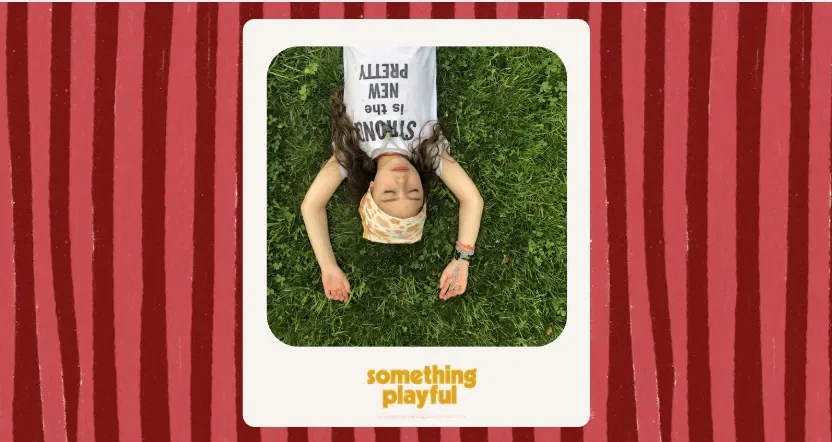
And that’s the thing about sensory play that gets missed when we reduce it to a bin full of rainbow rice: the most powerful versions of sensory play don’t have to look like an activity at all.
Sensory bins are awesome. I’ve used them, and I will continue to use them. I am not here to knock them. But they’ve become so synonymous with “sensory play” that a lot of parents think they’re the whole gist of it. And if they don’t have bandwidth or desire to create them, they’re worried their child is missing out on sensory play and that’s just not true.
I want to help you fully understand that sensory play can be any experience that engages your child’s senses: touch, movement, pressure, smell, sight. Their nervous system is taking all of it in, all day long. Sensory play is how they integrate it all together.
Taking a bath can be sensory play. Flopping into a warm basket of unfolded laundry can be sensory play. Jumping from the curb to the street and back up again while waiting for the bus can be sensory play.
This installment of Something Playful is designed to help you understand sensory play, what it means for your child, and low-lift ways to use what you have at home to support your child’s sensory regulation, mood, behavior, and, most importantly, have fun!
The rest is for my paid subs. Not sure if you want to become a paid sub? Use this 7-day free trial on me.
This week, we’re going a little broader with the kinds of sensory play that don’t fit neatly into a single material and how to think about what your child’s nervous system is asking for throughout the day.