Something Playful: The Art Cart Edit
Most art carts for kids are overstuffed and forgotten by July. Less is more, proximity matters, and here's exactly what to put out by age so that your kids want to create all year long
Something Playful is a paid series inside this publication. Each installment takes one type of play material (playdough, magnetic tiles, art supplies, sensory toys, chalk, bath toys, and more) and tells you exactly what to put out, how much, and what to do when it stops working. Age-by-age. No guessing. Become a paid subscriber for the full series →

I’ve been watching a lot of “stock my kids’ art cart for summer” content lately. And there’s a huge mistake most of them are making. I
The influencers, who want you to click links, are stuffing those carts full. Pouches of supplies, markers, pipe cleaners, stickers, and activity books. Every spot is filled. It looks incredible. It photographs beautifully.
But for most kids, a stuffed cart with too many options leads to chaos and then burnout. One day, they dump everything out, then there’s one moment of feeling like it worked, and then no one goes back to it.
That is not what I want for you.
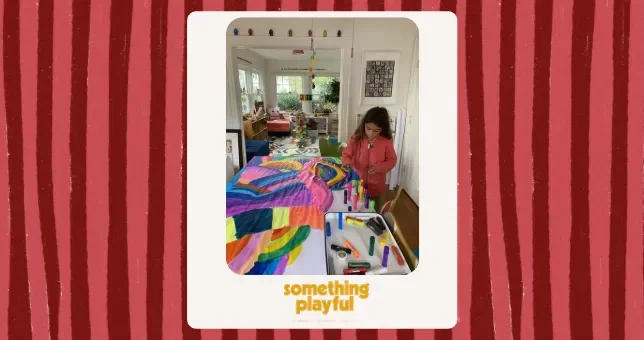
An art setup for kids is not the same thing as art storage.
The cart, the shelf, the cabinet, the tray on the counter, whatever you are using, is not where you keep everything. It is where you keep what’s available right now. The rest lives somewhere else. A closet. A bin in another room. A dedicated storage spot you pull from to rotate and refresh.
I want your art setup to be a lifestyle choice that lasts through ages and stages. Not one huge order that gets forgotten and dumped by July.
Keep it lean. Keep it manageable. Less is more. Don’t fill every spot just because you can.
Repeated experiences with the same sturdy, open-ended materials lead to mastery. Mastery leads to confidence. That is what you are building here.
The other day, my grocery delivery arrived, and I started prepping fruit and vegetables for the week. When a bowl of washed strawberries is sitting on the counter, my kids eat strawberries. When fruit is unwashed in the back of the fridge, under the lettuce, they grab whatever is closest. It’s usually not fruit.
I think about art supplies the same way.
Takeout is fine. We order it, we enjoy it. But a home-cooked meal is what I’m aiming for most nights, and the only reason it’s achievable in a busy week is the prep work I do on Sunday. None of that makes dinner happen automatically, but it makes dinner possible.
Play is the same. It doesn’t happen by itself at first. When you do the prep, when the markers are already out and open and within reach, you’ve made it achievable.
When my friends complain that their kids don’t use their toys, their markers, their art supplies, the ones they carefully picked out, maybe even organized into a cute little caddy, I ask one question: Where are the materials?
When it comes to independent play, proximity matters.
Are your markers in a crushed box, shoved in a drawer under a half-used pad of paper? I have a simple switch for you. Take them out of the drawer, out of the box. Test each one. Throw out the dried-up ones. Put the rest in a jar where your child naturally hangs out. The kitchen counter, the coffee table, the corner of the living room where they always end up after school. Rip a page out of the coloring book and set it next to the markers. Put another one there for yourself. Just let it sit.
Here’s why it matters: thinking of the coloring book, finding it, flipping to a page they like takes effort. And for a four-year-old already managing a million other things, that effort is enough to make them ask you to put on a show instead.
When the markers are sealed in a box on a shelf in another room, your child has to want to color badly enough to go get them, find them, open them, and choose a page. That’s four steps before a single mark gets made. It is probably not going to happen.
When the markers are already out, already open, already next to a piece of paper on the coffee table? The play can start in a second.
The rest of this post is for paid subscribers.