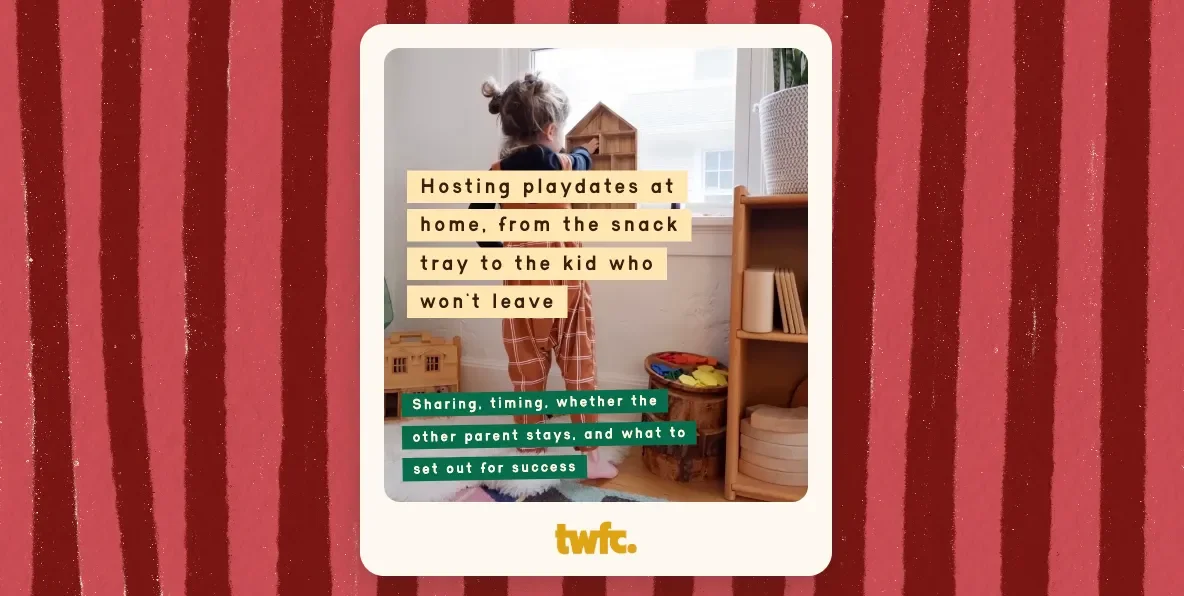
Hosting playdates at home, from the snack tray to the kid who won't leave
What to do about sharing/ should the other parent stay/ timing/ what to set out for success/ siblings
Yesterday at preschool pick up, your kid excitedly asked if Sofia could come over tomorrow after school. You said yes, because of course you did, and somewhere on the drive home today it hits you: another kid, in your house, in an hour, with your own crew already tired and hungry. If your stomach just dropped a little, this one's for you.When your first kid hits preschool age, nobody warns you how nerve-wracking it can be to have another kid over. Ahhh, playdates. On one hand, you want to be the welcoming house, the one your kid’s friends love coming to. On the other, there’s the mess, the meltdown, and the chance they’ll wake your sleeping toddler, who will then want in. Are you wondering why you’d even try to pull this off?
In my experience, home playdates are going to happen either way. One day your kid brings a friend home and there you are, ready or not. The good news: I’m handing you all my playdate wins and losses, so it can be something you’re ready for (mostly) instead of something you dread.
Let me start with the mindset, because it makes everything else easier.
Kids get better at being around other kids by being around other kids, especially outside the structure school provides. The mess and the squabbling are normal and they aren’t a sign the playdate is failing. That’s just how kids play.
Aim to let them practice, not to run a smooth two hours. You set things up, you stay close enough to step in, and you let it get loud and a little messy, within your comfort zone. It is your house.
So when another kid dumps everything out or runs around wrecking stuff, I’m not mad about it, but I am going to redirect them. It’s my job as the grownup to hold the rules. It’s not personal, and it’s not a sign of a “bad kid.” It takes time to figure out how to be at someone else’s house.
When you’re a little more prepared, playdates become less clean-up, less “don’t do that,” and more fun. You get to set the tone. Nobody gets shamed or put “in trouble.” It’s not my job to reprimand other people’s kids, but it is my job to hold my own boundaries.
Everything I learned the hard way is coming up: Below, I’m sharing the welcome ritual I never skipped, the setups that head off the chaos, and how I stayed neutral through every kind of kid, without shaming anyone or feeling resentful myself.
One thing to know before the how: most kids are not their best selves right after school. If yours are anything like mine were, they come home ravenous and cranky. They’ve been sharing all morning, and turn-taking at home might be hard. So keep it short. Have them leave while everyone is still having fun.
Here’s the trap I don’t want you to fall into: Kids didn’t get into much trouble at my house because I treated them kindly but firmly. Friendly, but not their friend. Thrilled to have them over, and also, my house, my rules.
Resist the urge to go all sing-songy and sugar-sweet because it’s someone else’s kid. Be firm, clear and kind from the get-go and thank me later.
The rest is for my paid subs.
(Not a paid sub yet? Use this seven day free trial on me and access all the archives behind the paywall. The Magnetic Tile Edit, The Sensory Edit, Why “Can I play with you?” sets kids up to hear no (and what to say instead) and so many more.