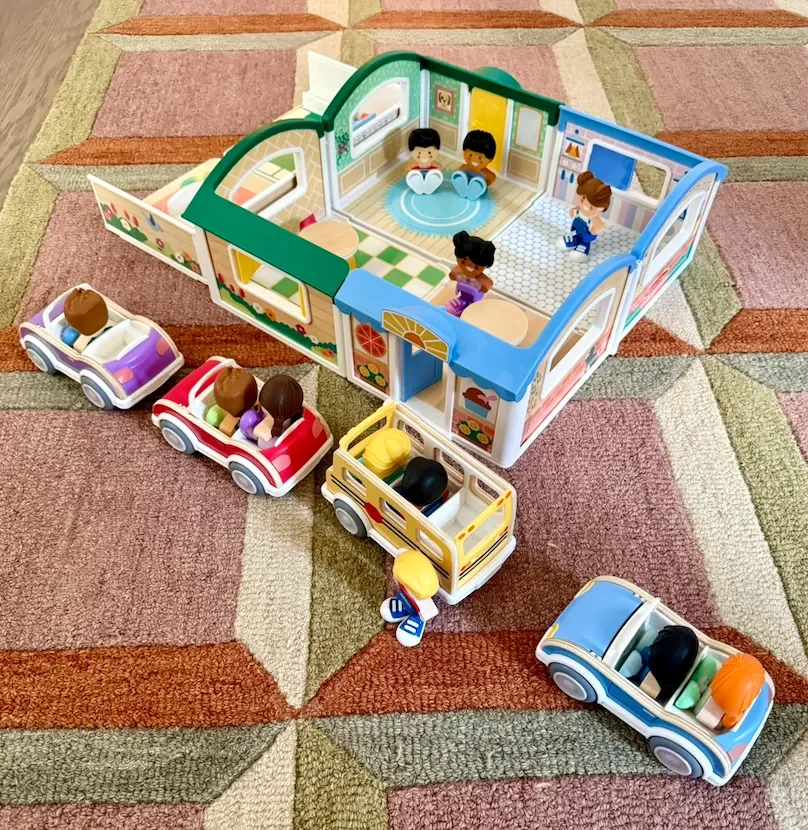
6 Ways to Use Play to Make Back to School Drop Off Easier
Dollhouse and school bus games for preschoolers and kindergartners, the goodbye ritual my youngest and I did for two years, and the thing she played about that I guessed wrong.
This post is a paid partnership with Melissa & Doug. #ad. Thank you to Melissa & Doug for keeping it paywall free so every one of you can read the whole thing.

It is officially back to school season here on the North Shore of Boston. There are a few eager leaves falling onto my lawn, and we are getting ready to trade in our beach bags and sunblock for backpacks and hand sanitizer. But if you are a parent who is getting ready for your first preschool or kindergarten drop off, I have a feeling that your excitement about fall leaves and farmer’s market apples is being curtailed by a small ache of worry about helping your child acclimate to school. Because whether you say goodbye in a drop off line, or you walk them in, a tricky drop off can send us all on a morning-long spiral.
Most of us prep our kids by talking…. A lot. We explain the schedule and promise they will love it. We ask a zillion questions and tell them that they are brave. But honestly? Most of that talking is for us, not them.
Kids process their life by playing about it. If you’ve been around these parts for any length of time, you have heard me say this every back to school season. Play is the best way to support little kids through big transitions.
I want you to think back to the last time you took your child to the zoo. I bet that later in the day you overheard them pretending to be the big hairy gorilla they saw, or that they asked you to read them Goodnight Gorilla or Dear Zoo.
That was them making sense of their zoo experience and assimilating the experience in a way that made sense to them. They may have asked you a question or two about the gorilla enclosure, but they probably built one out of blocks, looked at picture books about it, and played with their gorilla stuffed animal that you haven’t seen come out of the pile in a long while. And that tracks. Because playing makes things make sense for kids.
My youngest, who was notoriously slow to warm up and transition easily, played about school non-stop when she started Kindergarten. The school was much larger than the tiny co-op preschool she was used to, and I thought her play would be all about taking the school bus to her new school or navigating the lunch room. But those were the things I was thinking about the most, not her!
One day after school, my two big kids were off somewhere on their bikes in the neighborhood and my youngest, two floppy buns in her hair, wearing her favorite overalls with the stained knees, had started playing in our living room with her favorite wooden peg people, her small wooden dollhouse and a school bus toy. I tiptoed over and listened in, expecting to hear her “navigating the lunch room,” but the theme she kept playing over and over was the lineup routine. In her best teacher voice, she commanded the peg people to line up at the door, and then, go back to their seats and try it again. Over and over until they could do it without talking or pushing. She played out that scene for days until one day, she moved on to something else. And in retrospect it makes sense. She’d spent her nursery years in a one room schoolhouse. There was no lining up, there was nowhere to go except outside! Lining up was an entirely new concept for her.
Starting school is a big deal- for kids, for parents, for the entire family. Our kids need a way to make sense of it all. And when Melissa & Doug came to me about possibly working together for back to school, I immediately said yes.
I have been teaching parents how to use play to ease the back to school transition for years. In fact, I’ve been using our 15-year-old, Melissa & Doug, wooden fold-and-go-dollhouse that I bought when my oldest was starting preschool. Every year, I pull it off the shelf and share play tips across the internet with our old dollhouse as the backdrop.
Well, this year Melissa & Doug launched an innovative concept for dollhouse-style play and when I saw how they’ve designed the structures so the youngest kids can have easy access to play from above, I knew that these were products I could get behind. I am so excited about it, especially because it makes dollhouse play so much more approachable for the youngest kids.
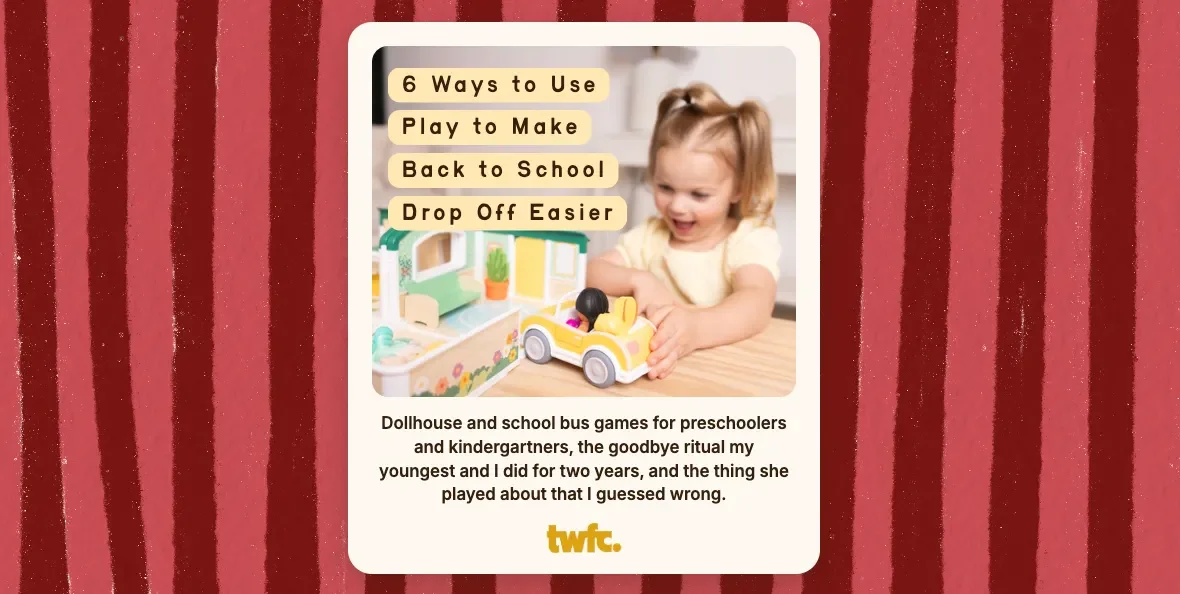
The Cheery Lane™ collection is your kid’s world in miniature: a fold-out house, a school bus, an ice cream and pizza shop, and little poseable people called Cheeries™. The rooms are modular, so kids can arrange their own floor plan, and they are open on top, so little hands can get in and play so much more easily than ever before. And the Cheeries pop right into the vehicles and stand on their own (they sit, too!), so kids can be completely independent in their play.
Today I am sharing 6 ways to play school with your kids that will support them through the transition period and beyond.
Set the stage for play. Pick a central location in your house, like your coffee table or the kitchen floor, and set out the Cheery Lane house, the school bus, and a few Cheeries. Kids want to be where we are, so keeping the playset central is key. When we keep toys visible and accessible, kids play more. After you do your bedtime routine, and the kids are tucked in, go ahead and set up Cheery Lane. The next morning, let them discover it on their own terms. Then pay attention. Listen to how they play. For most kids in the back to school transition, the school scenes will show up on their own. Some kids won’t play about school by themselves, and that’s okay too. The rest of this list will help them get started.
Play pretend drop-off with your child. Once your child has had a chance to play on their own, approach them gently with this, “Sammy, let’s play a game about school with the Cheeries.” And then, you pretend to be the parent, and ask your child to be the teacher. Drive the bus up to the house, drop your Cheery off, and tell the teacher your guy is feeling a little worried about being at school without his mom. Then, let your child (as teacher) do the comforting. If they need the words, offer them: “Teachers know how to help kids feel better.” And, “It’s okay for you to feel sad when you say bye to your grownup.” This game will help your child get used to the idea that teachers are warm and safe.
Give the Cheeries a goodbye ritual and once your child learns it, introduce it as your own goodbye routine. Three hugs, one kiss, and a high five, whatever fits your family. By the first real drop-off, they’ll have done it a hundred times with their Cheeries. A special goodbye ritual gives kids predictability and a tiny bit of control over the goodbye. I still remember the drop off routine with my youngest. Even through tears, she would give me three hand squeezes, a hug, a kiss, a high five. We did it every day for two years. And on the days I couldn’t make drop off, she did the routine with her grandpa or her babysitter.
Make the coming back predictable. When you are playing school, be specific about the pickup routine, and then, do the same thing in real life. “I’ll see you later!” means nothing to your four year old. Anchor it to their day instead: “I will see you after you play outside and sing the goodbye song.” Then give them a job: “I can’t wait to find out what color the play dough was!” or “I want to know what book your teacher read today.” This gives them a focus on your return, and it gives them a job to do for you while you are apart. At pickup, follow through.
Let your child be the one who leaves. When you are playing about school, have them drive the bus away, drop you off at school, and come back to get you. Your child will laugh at the silliness, but they will also be practicing the going away and the coming back, with them in charge for once. Tell them, “The grownups always come back,” and let them say it to you when they return.
If you have a toddler, play peek-a-boo with your Cheeries. Hide them under a towel and make them “go away” and then “come back” by lifting the towel and saying, “You came back! I knew you would come back!” If you have slightly older kids, hide the Cheeries in their homes and go seek them. We go away and we come back. The theme is on repeat. Trust me, it helps.
One more thing, because I feel you worrying about the first morning through my screen. And oh man, I get it. It was so hard for me too. It is okay for your child to cry at drop-off. It is okay for them to feel sad or worried. It is okay for you to feel sad or worried. You and your child are both still learning to feel comfortable with the new routine and with being at school.
And if you are reading this, but your child started school last month? This all still applies, maybe even more than for the kids just starting this week. Put out your Cheery Lane Play Set and listen closely as your child plays. You will hear more about their day at school this way than if you asked your 3-year-old, what did you do at school today?
So say an honest goodbye, do your ritual, and go. When you get home, leave the house and the bus and the Cheeries out on the coffee table. When toys are in sight, people play, and right now your kid has some playing to do about school.
Find the Cheery Lane collection HERE.
x, Lizzie
And if you want more guidance on how to get them talking about their day, because ‘how was school’ isn’t working? Tap below.
And if you want more guidance on how to get them talking about their day, because ‘how was school’ isn’t working? Tap below.
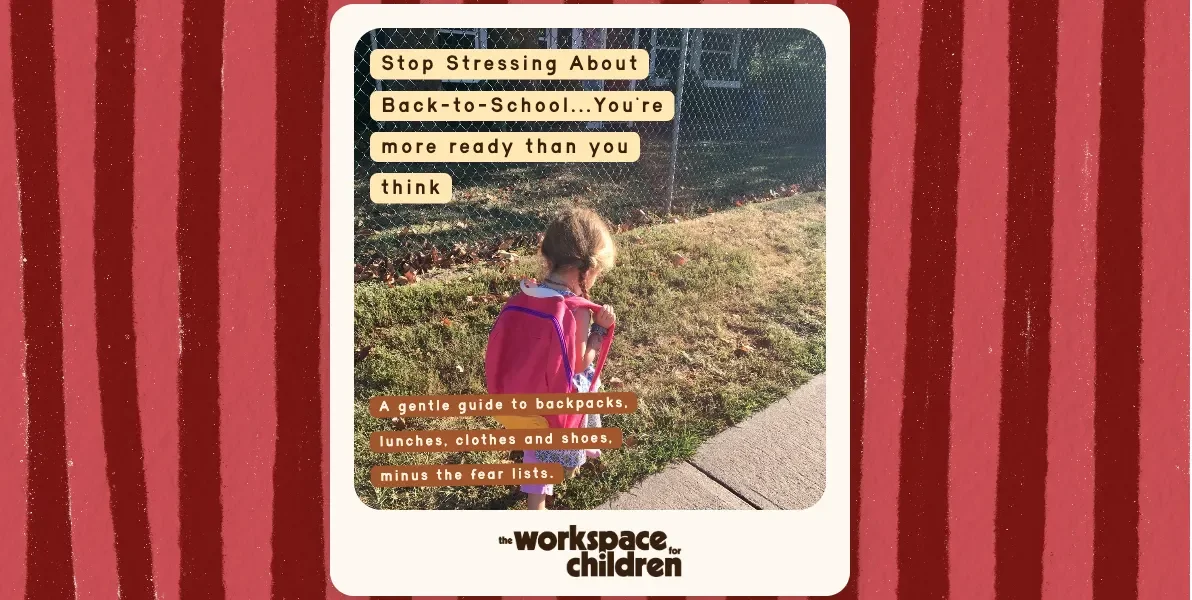
For more back to school support, including a gentle guide to backpacks, lunches, clothes and shoes, minus the fear lists, tap below.