Best Sidewalk Chalk and Chalk Activities for Kids: The Ultimate Outdoor Art Gift Guide
Gift Guides | Outdoor Art, Sensory Play & Creative Expression for Toddlers, Preschoolers & Big Kids
*This post contains affiliate links. I may earn a small commission if you purchase through my links, at no extra cost to you. I only recommend things I truly stand behind.
Sidewalk chalk is one of those rare outdoor materials that works for every age, every skill level, and every kind of kid. Toddlers grip fat sticks and make their marks. Preschoolers get more detailed and create worlds. Older kids grind chalk into powder, mix it into paint, and turn the whole driveway into a mural. It is wide-open, low-pressure, and completely washable.
This guide goes beyond the basic box. Alongside classic sidewalk chalk, you will find chalk paint, special-effects options, graffiti-style pens, and the unexpected kitchen tools that turn chalk into a whole art experience. Whether you are shopping for a birthday, filling an Easter basket, or just looking for something that gets kids outside and engaged, this list covers it all.
WHAT CAN I HELP YOU FIND?
Classic Chalk & Unique Formats
Chalk Paint & Special Effects
Tools That Transform Chalk Play
Accessories & Organization

Classic Chalk & Unique Formats
The best sidewalk chalk for kids is the kind they actually want to use. That means bright colors, satisfying textures, and formats that feel special. These picks go beyond the standard box and give kids a reason to grab their chalk and head outside.
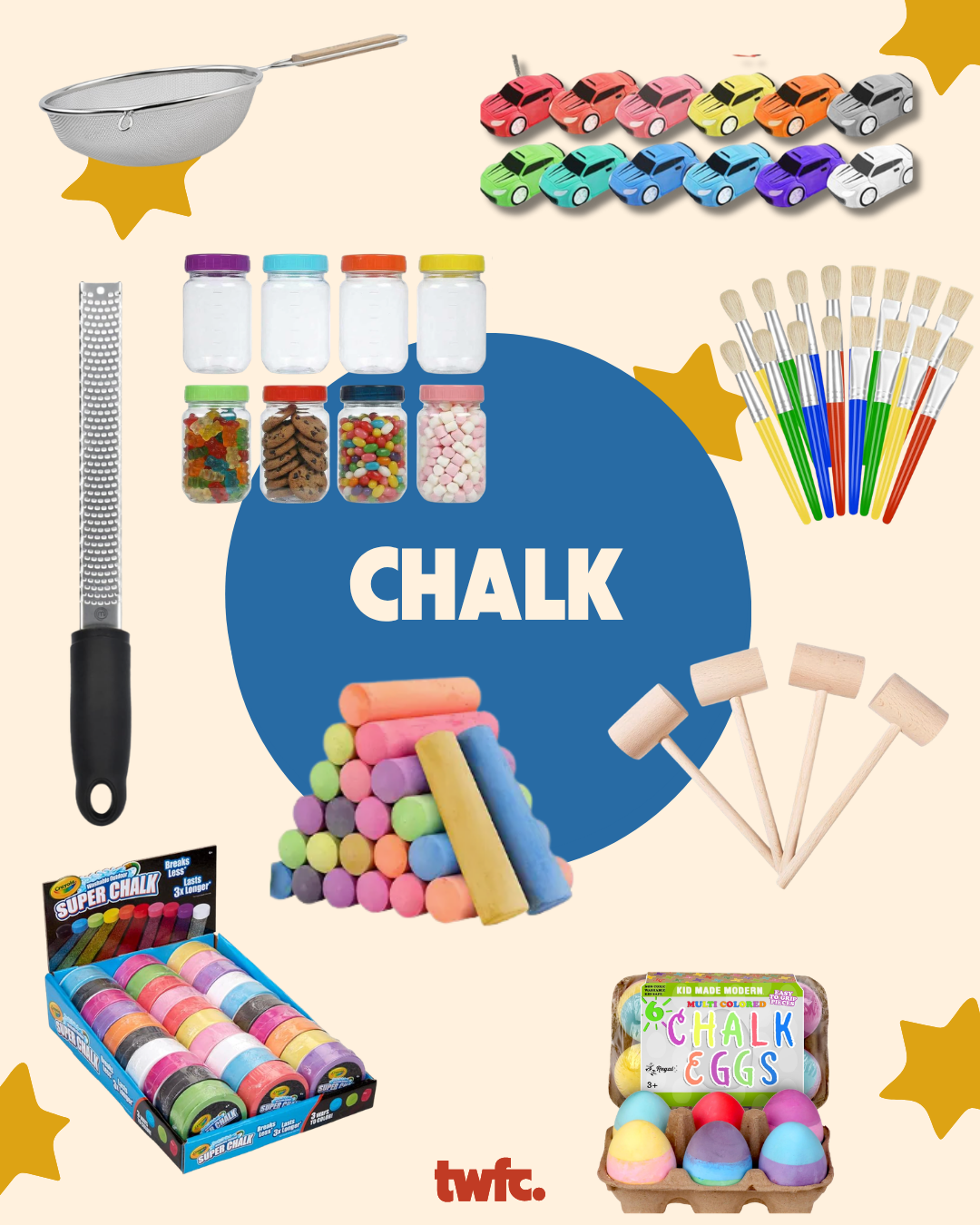
Why I chose it: Bigger sticks mean less frustration and more coverage. Super chalk is ideal for younger kids whose grip is still developing, and for anyone who wants to fill in large spaces quickly. The bold pigment shows up beautifully on pavement, and it holds up longer than standard chalk.
Why I chose it: A solid, classic set is the foundation of any chalk collection. Good pigment, good variety, and enough pieces that you are not rationing colors. This is the one to keep stocked in the garage so kids can grab and go whenever the mood strikes.
Why I chose it: The egg shape makes these irresistible before kids even touch the pavement. They fit perfectly in little hands, they are easy to store, and they make a great Easter basket addition or party favor. The novelty alone buys extra time outside.
Why I chose it: Chalk that doubles as a toy. Kids draw the track, race the car, and then redesign the whole thing. It combines fine motor work with imaginative play and keeps kids outside and engaged longer than a standard stick of chalk ever would.
Why I chose it: Black and white chalk is underrated. Give kids a monochromatic palette and watch what happens. They slow down, get more intentional, and create work that actually looks like art. This jumbo set is a great addition to a full color collection or a standalone invitation for kids who are ready for a different kind of challenge.
Why I chose it: The cone shape is the small detail that makes a big difference for young kids. It fits naturally in a fist, reduces frustration for kids still developing their grip, and holds up better than traditional sticks. Six colors, easy to hold, and less breakage. A solid everyday set.
Chalk Paint & Special Effects
Chalk paint and special-effects chalk expand what is possible on a driveway or sidewalk. Kids who love sensory experiences get texture, color mixing, and the satisfaction of watching their creation transform.
Why I chose it: Neon, glitter, metallic, color-changing. Special effects chalk turns a regular afternoon outside into something worth getting excited about.
Chameleon Colors Sidewalk Chalk Paint Kit
Why I chose it: Chalk paint is a completely different experience from drawing with sticks. Kids use brushes, mix colors, and create pieces that look more intentional and finished. This kit has everything they need to get started, and the color-changing element adds a science component that older kids especially love.
Tools That Transform Chalk Play
Here is where chalk play gets interesting. A handful of unexpected tools turn chalk from a drawing supply into a full sensory and science experience. These are the additions that take outdoor art from five minutes to an entire afternoon.
Why I chose it: Add water and a paintbrush to any chalk drawing and suddenly kids are painting. The chalk activates with water and becomes a wash of color. It is a completely different technique that older kids especially love, and it extends the life of chalk that would otherwise get ground into dust.
Why I chose it: The graffiti pen format gives kids a different grip and a different line quality than standard chalk. It feels more like drawing with a marker, which appeals to kids who prefer precise work or who love the idea of graffiti-style street art on a totally washable surface.
Why I chose it: This is the unexpected one that becomes the favorite. Grate chalk sticks into fine powder, mix with water, and you have chalk paint. Mix dry with cornstarch for a different texture. Kids who love science experiments and sensory play go absolutely wild for this. It is a kitchen tool that earns its spot in the outdoor art kit.
Why I chose it: Rub a chalk stick against the strainer and it turns into a powder. It adds a sensory element that drawing alone does not, and it teaches kids something real about how materials behave. Another kitchen tool with a second life in the art kit.
Why I chose it: Crush chalk with a wooden mallet and use the powder for painting, dyeing water, or just the pure satisfaction of smashing something constructively. Kids who love process over product thrive with this. It is also a great way to use up chalk nubs that are too small to draw with.
Why I chose it: Older kids who are ready for more precision can use a whittling tool to carve and shape chalk sticks into custom tips, points, or sculptural forms. It introduces real craft skills alongside art, and the focus it requires is its own reward. Not for the youngest artists, but a genuinely meaningful tool for kids who are ready for it.
Why I chose it: Crush chalk into powder the old-fashioned way. The mortar and pestle gives kids a hands-on, sensory process that feels intentional rather than accidental. They can blend colors, create custom shades, and use the powder for painting, dyeing water, or making chalk-based art. It is the tool that turns chalk play into a full sensory experience.
Why I chose it: Grate chalk sticks into fine powder and suddenly you have a completely different material to work with. Mix it with water for paint, layer colors on the pavement, use it for tie-dye effects on paper. It is a kitchen tool with a second life in the art kit, and kids who love process and experimentation go absolutely wild for it.
Accessories & Organization
Good organization makes chalk play easier to start and easier to clean up. These picks keep supplies accessible, protect chalk from crumbling, and give kids a sense of ownership over their materials.
Why I chose it: Chalk holders extend the life of every stick by keeping kids from gripping and crushing the end. They also make drawing more comfortable and reduce waste. If chalk nubs pile up in your bin, chalk holders are the fix.
Why I chose it: Perfect for organizing chalk powder by color, storing crushed chalk for paint mixing, or just keeping supplies sorted and visible. Kids can grab what they need without dumping the whole bin. Unbreakable, reusable, and easy to label.
Building Your Chalk Kit
You do not need everything here to have a great chalk setup. Start with a solid classic set and one or two tools that match how your child plays. If they love process and science, add the zester and mesh strainer. If they are into dramatic play, the race car chalk is a no-brainer. If they want to paint rather than draw, grab the brushes and chalk paint kit.
Chalk is one of the most underrated outdoor art materials. It washes off, it works on almost any surface, and it invites kids to work big and experiment freely in a way that paper and markers never quite do. The right additions just help kids get more out of what is already a great material.