Something Playful: The Tinkerspace Edit
How to Set Up a Simple Outdoor Tinkerspace for Creative Summer Play: What to Expect/ The Setup and Cleanup / Mud kitchens/ The Rules/ Favorite add-ons for building out your Tinkerspace
This is week 6 of Something Playful. Over the past few weeks, I’ve been going one material at a time — playdough, board games, magnetic tiles, bath toys, chalk — showing you how to use what you already have at home to get more independent play out of each one. This week: THE TINKERSPACE EDIT.


Before we dive in, I want to thank Guidecraft for sponsoring this post and keeping it free for all subscribers! I have been a loyal Guidecraft customer for over 20 years. First as a preschool teacher, then as a parent. Their products have always been woven throughout my home and classroom because their child-first approach to play aligns so deeply with my philosophy on play and childhood.
They are offering The Workspace for Children community 10% off your entire order on their website with the code LIZZIE10 (limited to one use per customer). Thank you, Guidecraft!!
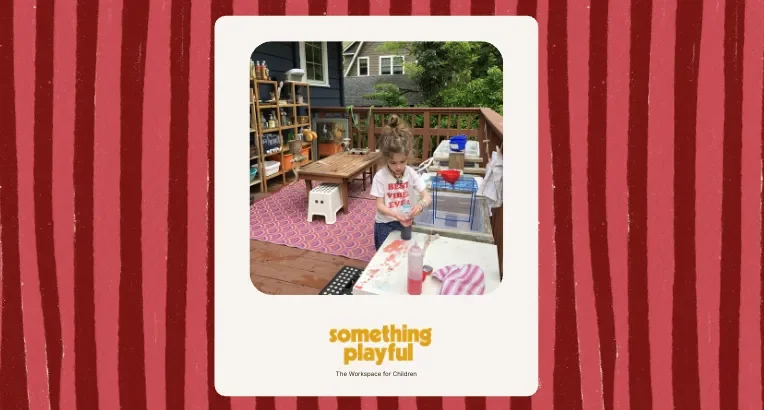
It was one of the first warm-ish afternoons where you could actually feel the sun on your skin.
My toddler and preschooler were bouncing between the playroom and the backyard, trailing bright orange Goldfish crumbs in their wake. Every time the back door slammed, I shuddered, thinking the baby would wake and our evening routine would go out the window.
I needed a plan to keep them outside, so I filled a water table. I grabbed some measuring cups, a colander, a half-empty shampoo bottle, a few plastic animals, and a sponge I’d cut into fourths.
Nothing fancy.
They poured. They scrubbed. They added grass clippings and flower petals to their game.
I emptied the dishwasher and prepped dinner as I watched them through the kitchen window. The dog found a sunny patch and didn’t bark once. The baby slept.
That was the beginning of our tinkerspace.
There was no aesthetic fairy potion-themed mud kitchen. There were no color-coordinated sensory trays or sight words anywhere. Just a place where they could pretend, mix, test, explore, repeat.
They giggled, pretended, bickered, made up, and played their little hearts out. And I knew we were on to something special. Something important. Something that would change outdoor play in our home forever.
Eleven years later, those same children, alongside neighbors and friends, had clocked hundreds of hours building, painting, washing, digging, fighting, laughing, and snacking in that same spot on the deck.
That tinkerspace pulled us through a pandemic. It gave me countless hours back to pursue my own interests while they played.
It was sometimes a huge mess, but it was always worth it.
Over the years, the setup changed alongside their interests. The energy changed depending on who was back there. But one thing stayed the same: they came back to it. Again and again.
We’ve since moved to a new state, and my kids are much too old for a tinkerspace now. But sometimes I let myself imagine the new owners tearing down the old deck and finding glitter, marbles, and whittling tools underneath the dirt, and that magical, creative energy rising from that spot in NJ.
Before I Get Into the How
I want to say this: your space does not need to look like mine did or the ones you are seeing on the internet. It doesn’t need a theme. It doesn’t need to be aesthetically pleasing or color coordinated.
Start where you are. A single water table or sensory bin in a designated corner is enough. A sturdy mud kitchen that can hold up to wear and tear is enough. Add to it gradually, as you feel ready, and as your kids grow into it.
Please don’t buy all the things and set them all out at once. That’s how you end up overwhelmed, and your kids end up overstimulated. Start small and let the space grow with you.
Your children will likely move between running around and coming back to tinker. That’s okay. They’re not wired to focus on one thing for long stretches, and they don’t need to be.
The Logistics
I used to set up our tinkerspace at the first signs of spring and pack it away before the first major snowfall. We had a small roof overhang that protected the main shelf, but the weather still took a toll. Heavy winds or summer thunderstorms left things soggy, so I dumped out standing water to avoid mosquitoes and brought in anything fragile before a big storm.
But for the most part, I tried not to overthink it. This space was meant to be used, not admired.
If you don’t have any outdoor cover, a closed shelving unit or lidded storage bin can protect your materials fine enough.
The Surface Is the Secret
A water table is great. But what made our tinkerspace different, what turned it into a place my kids came back to again and again, was having a surface to work on.
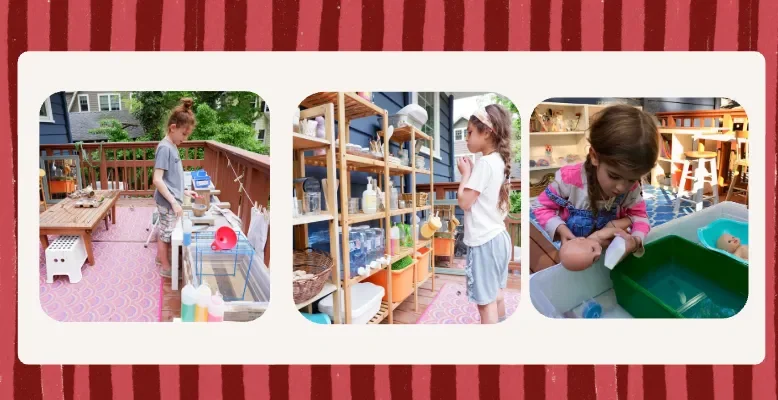
A table. A workbench. A plywood board on crates. It doesn’t matter what it looks like. What matters is that there’s a flat, sturdy place where kids can build, mix, spread out, and make things.
The water table invites splashing. A surface invites creating.
It’s where the homes for worms got built and decorated. Where the “potions” were lined up and labeled. Where my oldest whittled sticks while his sisters made chalk into paint beside him. It’s what kept the older kids engaged long after they’d outgrown scooping and pouring.
Without a surface to work, really work, the space gets outgrown quickly. With one, it becomes a studio for toddlers experimenting with scooping and dumping, tweens building things that really work, and everything in between.
The table should be at a height your child can stand or sit at comfortably, and one that can stand up to weather, pounding hammers, and paint spills. It’s not meant to be kept clean or precious. It is a workhorse.
A Few Ground Rules
We were pretty relaxed out there. As long as the kids were using materials productively, not hurting anyone, and not destroying anything, I let them go.
The younger the child, the fewer materials I put out.
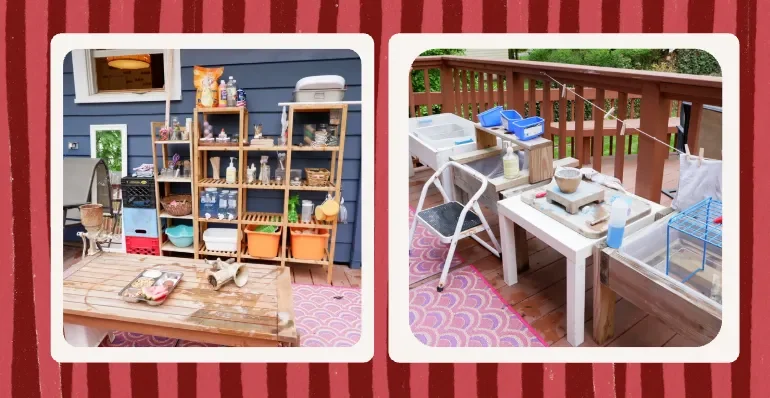
Things like paint, shaving cream, and baking soda lived on the top shelf. It was an “ask mom first” shelf. It became a golden rule. The kids took it seriously. They earned my trust, and eventually, they grew into permission to climb up and get it themselves. That took time.
For Young Children
You don’t need a big setup for this to work. For toddlers and preschoolers, a few open-ended materials go a long way: a water table, a surface to work on, independent access to water, a mirror, baby dolls or animal figures, soap, rags, and a sponge.
It all depends on your child’s interests and your comfort level. You can always add more later.
And a reminder, most toddlers will be thoroughly busy with a bucket of water, some sponges, and a few vessels to pour and scoop with. You don’t need the whole catalog.
Clean-Up
At the end of the day, I’d fill a large bucket with soapy water. We were lucky to have a hose that reached the deck, which made everything more manageable.
I’d rinse the easy-to-clean items first, swish them in the bucket, and return them to the shelf. The harder stuff got tossed in to soak while the kids swept up and put things back. Then I’d hose out the sensory bins and the ground, finish the soaking items, and put them away.
And sometimes I hosed off the kids, too. No bathtime needed that night.
I know that sounds too streamlined to be real. The truth is, it got easier with practice. The more often you and your kids do it, the smoother it becomes. Most days, my kids helped. They understood that if they wanted to use the space, they pitched in. Other days, I asked one kid to help while the others headed inside for showers. It depended on the day.
And just a reminder: it’s okay to say, “The outdoor space is closed today.” Bikes and scooters are open. The front yard is open. The backyard is closed. If it’s not fun or manageable for you, it’s not worth forcing. You get to set the tone.
Getting Your Partner on Board
For years, this space was a point of tension between my husband and me.
While I was beaming over the creativity and learning happening out there, he was groaning about the state of our deck, which, to be fair, often looked like a craft store had a breakdown on it. He worried about paint stains and muddy footprints across the living room rug. I was frustrated that he couldn’t see the value in what our kids were building, literally and figuratively.
Eventually, we met in the middle. I got more intentional about teaching the kids to check their hands and feet before coming inside. I started doing a quick tidy before he got home, which made the whole thing feel less overwhelming to him.
Over time, he began to appreciate it. He started helping, building things for us, offering ideas. One year, he installed a gate to keep the puppy out after she chewed a bottle of hot pink paint that stained her snout and paws for weeks.
What If I Have a Baby and Big Kids?
You’ll need to simplify and stay more hands-on, especially during the baby and toddler season.
Start with safety. Make sure materials are appropriate for both ages. A toddler and an older child can both enjoy sensory play with just soap and water. Use baby shampoo to avoid stinging eyes.
Keep anything off-limits for your baby out of their sight. Lower shelves should hold only “yes” items: baby dolls, large animals, a small water dispenser, metal cups. Older-kid materials go up high and come out when the baby is napping. My big kids got to take turns having quiet time alone in the tinker space sometimes, and it was a highly anticipated favorite. Just make sure everything is cleaned up before your littlest joins back in.
Will This Stain My Deck?
It might.
Our deck definitely experienced its share of wear and tear from years of creative play. For our family, it was worth it. I was more invested in living in our home than keeping it looking magazine-perfect.
But I get that this isn’t for everyone. If a deck setup doesn’t feel right, think creatively. Use your driveway, patio, or a tarp-covered patch of grass, which could work just as well.
If You’re Looking for a Way to Get Your Kids Outside This Summer
A way to keep them engaged without you planning every moment, this might be the thing. Simple. Meaningful. Messy. And easy to clean with a hose.
You don’t need to use the space every day. Just when it feels manageable and joyful. There’s no perfect way to do this. But I keep coming back to the same thing: when I gave my kids space to get messy, build something, and figure it out on their own, they rose to it. And I got a little breathing room too.
Keep reading for all of our Tinkerspace Favorites.
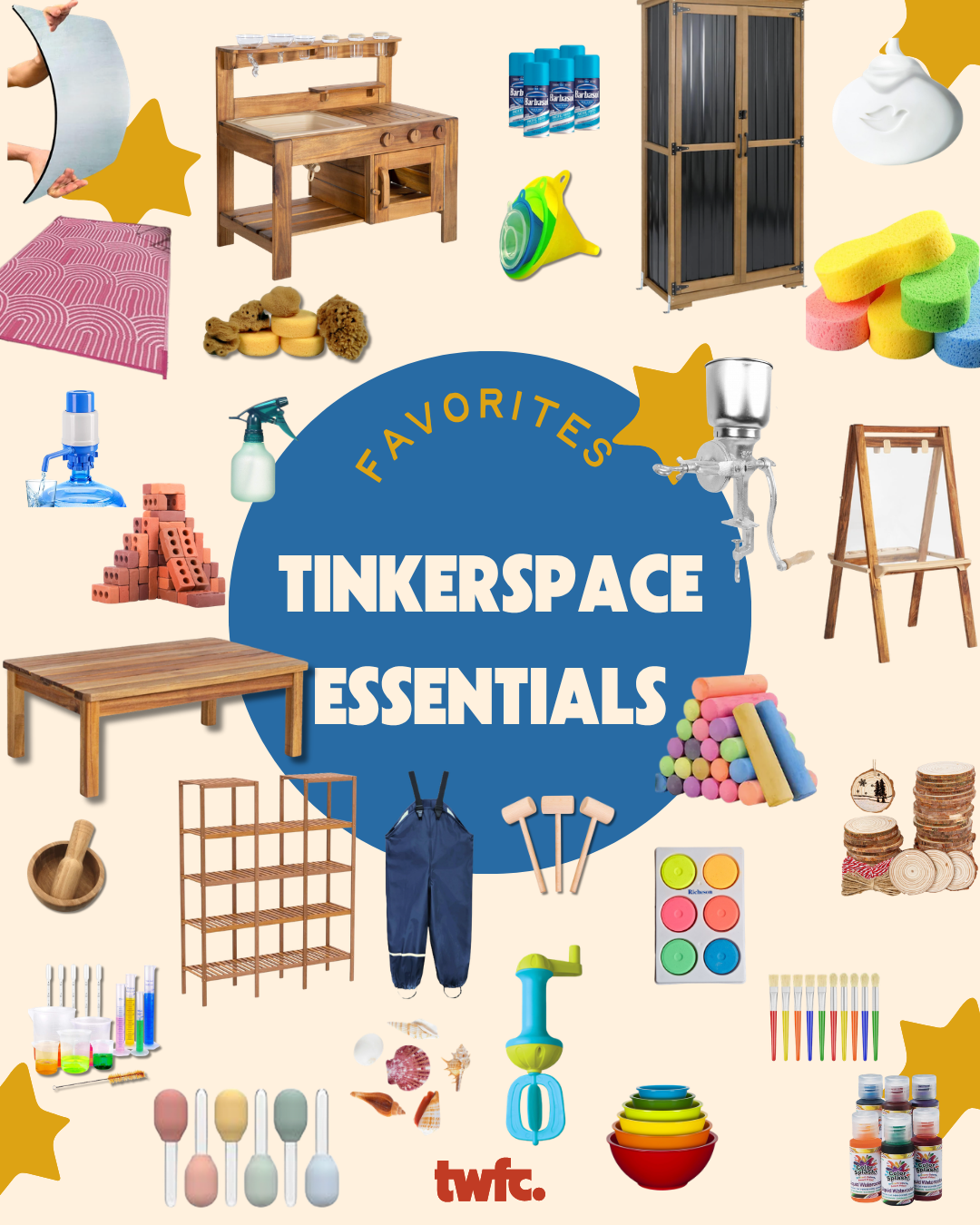
Why I chose it: This can be the anchor of an outdoor tinkerspace. Kids cook, mix, pour, and experiment for hours. It gives the whole setup structure and purpose without prescribing what they have to make. Get it when the kids are young, they’ll use it for years to come. Worth every bit of the investment. USE CODE LIZZIE10 FOR 10% OFF
Why I chose it: Skip the paper altogether and let kids drip or spray paint, draw with paint sticks and dry-erase markers directly onto this easel. Hose it down at the end of the day. USE CODE LIZZIE10 FOR 10% OFF
Outdoor Storage Cabinet with Shelves
Why I chose it: This cabinet keeps materials protected from the elements and organized by type. Close it up when it rains, open it up when it is time to play.
Why I chose it: A rug defines the space. It tells kids this is where we work. Easy to sweep off and hose down when things get messy.
Why I chose it: A low work surface is ideal for play. Kids can stand or sit, spread materials out, and work at a height that makes sense for them. USE CODE LIZZIE10 for 10% OFF
Kids Outdoor Craft Table and Benches
Why I chose it: A sturdy surface where they can sit or stand, with built-in shelving. USE CODE LIZZIE10 for 10% OFF
Kids Outdoor Potting Bench
Why I chose it: A sturdy surface to work right next to their mud kitchen extends play, and I love the built-in storage. USE CODE LIZZIE10 for 10% OFF
built to withstand sun, rain, and moisture, ensuring lasting outdoor creativity through every season.
Why I chose it: Built to withstand sun, rain, and moisture, ensuring lasting outdoor creativity through every season. USE CODE LIZZIE10 for 10% OFF
Folding Lightweight Step Stool
Why I chose it: Gives kids access to their own materials without needing a grownup every five minutes.
Why I chose it: A mirror in the tinkerspace adds a sensory layer kids do not get anywhere else. They watch themselves mix, pour, and create. It reflects light, adds visual interest, and deepens the sensory experience of the space. They can paint on it, wash it, and work in front of it.
3 Gallon Plastic Beverage Dispenser with Spigot
Why I chose it: Gives kids independent access to water without turning on a hose or asking an adult.
Why I chose it: No hose needed, keeps kids in charge and adults in the background.
Why I chose it: Kids spray watercolors onto paper, mist chalk art on the pavement, water plants, or just experiment with how water moves.
Why I chose it: Fill it with liquid soap, liquid watercolor, or anything else that benefits from a measured pump. Kids love the controlled dispense, and it keeps materials from getting wasted or spilled all at once.
Why I chose it: Use it for water play, mixing, collecting loose parts, or containing messy projects.
Why I chose it: Keep a stack within reach for play and for cleanup.
Why I chose it: Colorful, stackable, and the right size for mixing small batches of paint, potions, or whatever the experiment calls for.
Why I chose it: Sturdy and perfect for a child’s hands. USE CODE LIZZIE10 for 10% OFF
Individual Condiment Sauce Cups
Why I chose it: Kids fill them, line them up, pour between them and scoop and dump.
Why I chose it: A must-have for any water or liquid station.
Plastic Graduated Cylinders and Beakers
Why I chose it: Measuring, comparing volumes, mixing, and observing- the best for making potions!
Why I chose it: The perfect size for little hands.
Why I chose it: Nest them, stack them, strain through them. The sieve alone opens up a whole category of experimentation: what passes through and what does not? Indoors or outdoors, this set earns its spot.
Why I chose it: Small scoops for transferring and digging. The silicone is flexible enough for little hands and durable enough to last.
Why I chose it: Squeeze, release, repeat.
Why I chose it: Keep multiples so kids never have to stop and wash between colors. Works on paper, wood, rocks, pavement, whatever they find.
Why I chose it: Add soap and water and let them go. Foam, bubbles, and deeply satisfying hand work.
Why I chose it: Stir, mix, whip. Kids love using a real kitchen tool.
Why I chose it: Simple and completely open-ended. Works in water, sand, dirt, and play-dough. You can never have too many.
Why I chose it: Crush chalk, grind flowers, pulverize grass.
Why I chose it: Grate chalk into powder, shave soap into flakes. A kitchen tool with a serious second life outside.
Why I chose it: Hand-crank, watch it transform. Children grind up chalk, weeds, flowers, you name it. They all LOVE this tool.
Why I chose it: If you dont want them to use a sharp tool for grating chalk, a steady back and forth motion against the sieve will get them same chalk powder as a sharp tool.
Why I chose it: Safe enough for kids, satisfying enough to keep them coming back. Play dough, clay, mud kitchen vegetables.
Why I chose it: Crush chalk, pound clay, or just make things happen in the mud kitchen.
Why I chose it: Add to water play, mix with shaving foam, you only need a few drops. One bottle goes a very long way.
Why I chose it: Just add a wet brush. No lids to lose, no cups to knock over. Paint on anything.
Kwik Stix Solid Tempera Paint Sticks
Why I chose it: No brushes, no water. Twist and go. Dries fast and works on almost any surface and washed off clothes, skin and smooth surfaces with a soapy rag. .
Cone Shaped Washable Sidewalk Chalk
Why I chose it: The cone shape fits little hands and the quantity means no one is rationing colors.
Why I chose it: Squirt onto a tray, add liquid watercolor, fill a sensory bin. Kids will know what to do.
Why I chose it: Grate it, foam it, add it to water play. Simple and inexpensive with a lot of uses.
Why I chose it: Squeeze them, cut them, use them at the base of a bun of soapy water.. Kids always find a use you didn’t expect and the large size makes them great for large surfaces.
Why I chose it: Different texture and weight than synthetic.
Why I chose it: Children 18 months and up can explore size and shape relationships through simple builds using the oversized boards, wood cookies, and branch shapes in this set. USE CODE LIZZIE for 10% OFF
Why I chose it: Get these wet, get them muddy, wash them off, and start again. USE CODE LIZZIE10 for 10% OFF
Little Pavers Get these wet, get them muddy, wash them off, and start again. USE CODE LIZZIE10 for 10% OFF
Treasure Tubes Hold marbles, beads, twigs, leaves, dried flowers, and more. Stack the tubes on top of each other to customize play. USE CODE LIZZIE10 for 10% OFF
Why I chose it: Drop them into any setup, and the play immediately gets more interesting.
Why I chose it: Sort, arrange, paint on them, build with them, wash them.
Why I chose it: Canvas, platform, building material, art project. Completely open-ended.
Next week: The Water Play Edit: Age-by-age water play. Prompts, set up, clean up, and how to extend it from toddlers to tweens.
See you next week
x. Lizzie
INCYMI:
Every week I’m breaking down the toys and materials you already have at home and telling you exactly how to set them up for independent play.
Here are a few examples! Click below.