Something Playful: The Body Tracing Edit
Set Ups Age by Age/ What to Expect/ The Setup/ Ways to Trace/ When It's Not Working/ Trace Their Favorite Toys/ Set this up for Toddlers through Tweens
I have this deep memory, ingrained in the back of my head, and every time I see a chalk outline on a driveway or a sidewalk, it comes barreling back.
It was around 2010 and my oldest was three. He had just come home from his half-day co-op preschool, he was grumpy and hungry, and the vibe was off. I was racing around, trying to keep the baby from falling asleep in the carrier because I so desperately needed Nate to go to quiet time while Ruby napped so I could just… breathe for a second.
I raced through his lunch of a hummus and avocado sandwich, blueberries on the side, but not the mushy ones or sour ones, settling the baby in for a nap, and helping him carry three of his favorite giant Bruder trucks up to his room for quiet time. The rule was that big trucks stayed in the playroom, but I was desperate and probably would have said yes to a lot worse than those three trucks in his room to get some peace and quiet.
Once he was settled in his room, and I had tidied up the kitchen, yapped on the phone with my sister, and thrown in a load of laundry, that off-vibe feeling came back. It was that feeling that my oldest needed more of me than being rushed out of the car, to quickly eat lunch and go to quiet time. Life with a new baby in the house had been hard on him, and I needed something that felt special and connected.
And that’s when I remembered one of my favorite preschool activities and decided I would get him early from quiet time, before Ruby woke up, and do some tracings together. His favorite color was unwaveringly green. So I pulled out every green marker, colored pencil and crayon I could find and I put them in a jar on the floor. I rolled out a long stretch of butcher paper on the floor of our small kitchen, and I tip toed up to his room, slid his creaky door open, praying I wouldn’t wake Ruby in the room next door.
He was sitting on the floor, surrounded by matchbox cars and his three prized trucks, playing some pretend game that I was not privy to.
“Nate-Nate, come downstairs. I wanna show you something!”
“But mama, the green light isn’t on yet!” (such a rule follower, my first born son)
“It’s okay. I want to make something, just me and you.”
And hand in hand, we went downstairs. I popped the straw into his favorite chocolate milk, and then I traced him on the big paper.
He worked on it for days, coloring every last detail: green pants, green shirt, green socks, but brown eyes, because… rules, ya know?
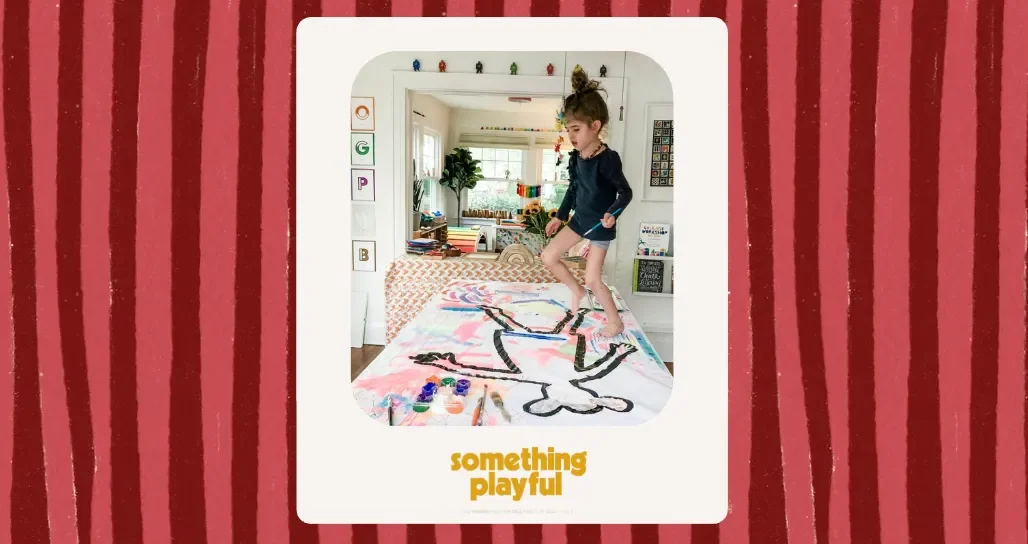
That grumpy, off kid who needed more of me than a rushed lunch? After a few minutes of me on the floor, tracing around his fingers and noticing his hair, he was settled. He didn’t need me hovering. He colored that paper on his own for days.
This is what I mean when I say connection comes first. Give your kid a few minutes of your full attention, really just them, and it gets so much easier for them to go play on their own. Body tracing does exactly that in one activity, you lead with a few minutes of real closeness, and it buys back hours of them happily coloring on their own.

This is the next installment of Something Playful. Same idea as always: one material, one week, how to use what you already have at home to get more independent play out of it. This week, body tracing.
Everything past this point is the how: what to use with a two-year-old versus an eight-year-old, four ways to trace, what to do when it’s not working, and more. Subscribing unlocks every Something Playful edition I’ve ever written, not just this one. Magnetic Tiles, Chalk, The Art Cart, Sensory Play, Stickers and many more.